DPM says accord does not ‘replace’ any existing bilateral or multilateral agreements between the three countries
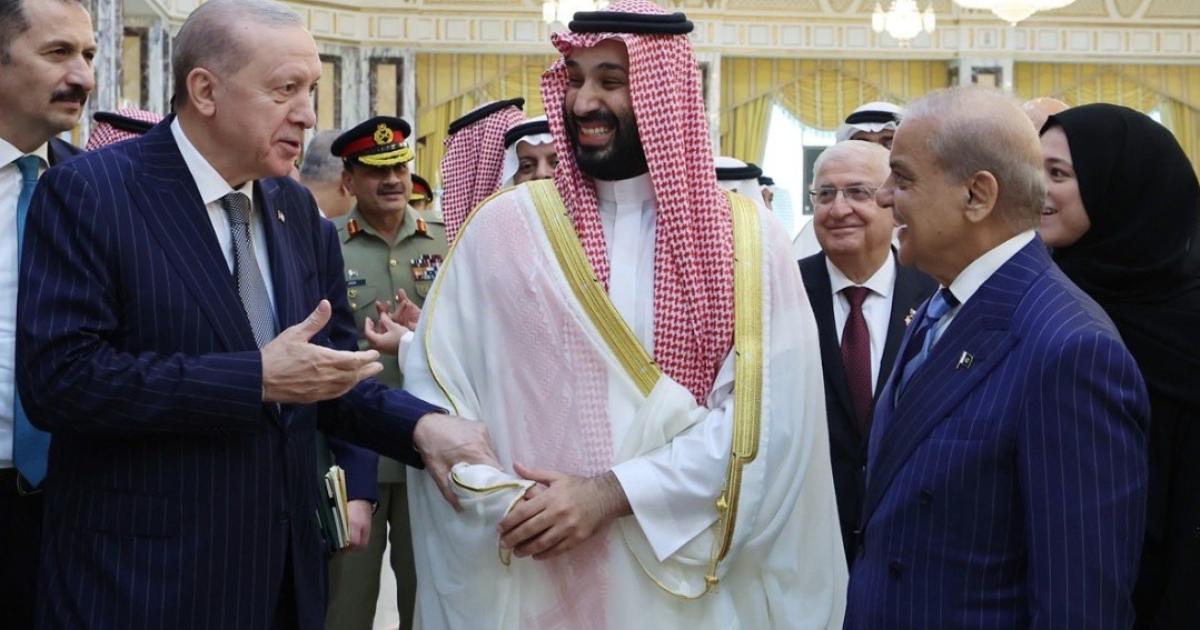
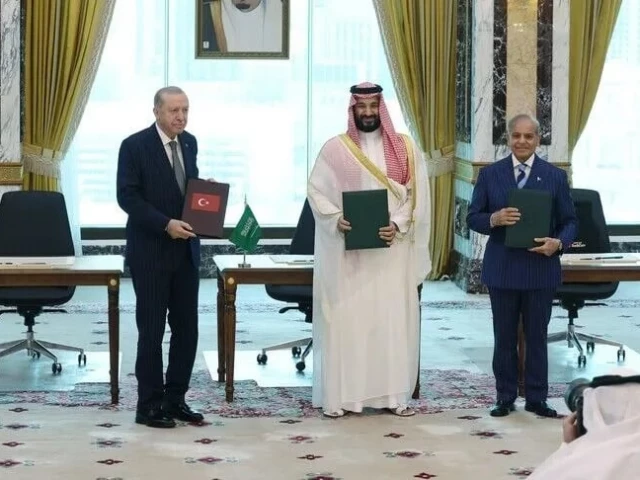
Turkish President Recep Tayyip Erdogan, Saudi Crown Prince Mohammed bin Salman and PM Shehbaz Sharif pose after signing a joint defence agreement in Makkah, Saudi Arabia. — SAUDI PRESS AGENCY
Deputy Prime Minister and Foreign Minister Ishaq Dar said on Sunday that the Makkah Joint Defence Agreement with Saudi Arabia and Turkiye was “purely defensive in nature” and was “not targeted against any country”, as he sought to clarify the purpose and scope of the pact amid growing discussion over the agreement.
The Makkah Joint Defence Agreement was signed by Pakistan, Saudi Arabia and Turkiye on Friday, establishing a framework for collective security and defence cooperation under which an armed attack on any one of the three countries would be considered an attack on all. The pact built on a Strategic Mutual Defence Agreement signed by Pakistan and Saudi Arabia in September 2025, which contained a similar mutual-defence commitment.
In a post on X, Dar said the agreement’s “sole purpose” was to strengthen ongoing efforts towards “peace, stability and prosperity” in the wider region. He described the Makkah Accord as a reflection of the “depth of the brotherly relations” between the leaderships and peoples of the three countries.
In the light of ongoing discussion and interest surrounding the “Makkah Joint Defence Agreement” (The Makkah Accord) over the past two days, the following context and clarity on this Agreement may be useful for everyone to note:
• The Makkah Joint Defence Agreement, jointly…
— Ishaq Dar (@MIshaqDar50) August 9, 2026
He said the agreement was the culmination of “years of discussions and coordination”, driven by a shared desire to strengthen strategic cooperation in addressing “multifarious peace and security challenges” and advancing regional peace, stability and prosperity.
Dar stressed that the accord did not “abrogate or replace” any existing bilateral or multilateral agreements between the three countries, or their agreements with other countries or organisations.
Under the agreement, “any external armed attack on any one of the three countries will be considered as an attack on all”, consistent with the inherent right of individual and collective self-defence under Article 51 of the UN Charter.
The foreign minister said the accord remained open to other countries in the region willing to uphold its “fundamental principles” and resolve differences through “mutual respect, cooperation and peaceful means”.
Read: Inside the Makkah defence pact and its regional implications
He said the agreement was consistent with Pakistan’s “fundamental pillars” of foreign policy and reaffirmed Islamabad’s commitment to working with “all brotherly countries in the region” towards lasting peace and stability.
“We remain committed to advancing the cause of peaceful resolution of all conflicts and building a more secure, stable and prosperous future for our peoples,” Dar said.
Separately, Turkish Foreign Minister Hakan Fidan said on Saturday that President Recep Tayyip Erdoğan wanted the framework to expand beyond the three founding members, with Egypt among the potential countries that could join once certain technical matters were resolved.
He added that a ministerial committee and a general secretariat based in Saudi Arabia were also planned, with operational details to be worked out at the committee’s first meeting.
Significance of the Makkah Joint Defence Agreement
The Makkah Joint Defence Agreement was the latest step in longstanding military and strategic cooperation between Pakistan, Saudi Arabia and Türkiye. Signed in Makkah, the pact established a framework for collective deterrence and stipulated that an armed attack on any one of the three countries would be considered an attack on all three, while providing for wider cooperation across defence.
The agreement followed nearly a year of negotiations and came amid heightened instability across the Middle East. Türkiye and Pakistan had sought closer regional security cooperation, while Saudi Arabia had faced growing security concerns as conflicts spread across the region, threatening its territory, energy infrastructure and ambitious economic development plans.
For Pakistan and Saudi Arabia, the trilateral pact built on their Strategic Mutual Defence Agreement signed in September 2025. That agreement stated that “any aggression against either country shall be considered an aggression against both” and committed the two sides to strengthening defence cooperation and joint deterrence.
Read More: Pakistan, Saudi Arabia, Turkiye sign joint defence pact in Makkah
The three countries already had extensive military links. Pakistan had provided training and technical assistance to Saudi forces for decades, while Islamabad and Ankara had maintained close defence ties through military training, naval cooperation and defence equipment. In 2023, Saudi Arabia agreed to purchase Turkish drones in what Ankara described as its largest defence export contract.
Pakistan had also expanded its military and security cooperation with the kingdom, deploying about 8,000 troops, fighter jets, drones and an air-defence system to Saudi Arabia, according to Reuters. Pakistan deploys troops to Saudi air base under defence pact Islamabad had also been pursuing wider security and economic ties in the Gulf, including negotiations with Kuwait on an expanded cooperation pact linked to energy and investment. Pakistan-Kuwait agree to boost cooperation across key sectors
The signing in Makkah, Islam’s holiest city, added symbolic weight to an agreement that brought together three countries with significant military and strategic capabilities. It also came as Pakistan sought to avoid becoming directly involved in the Iran conflict, instead pursuing diplomatic efforts to mediate, while strengthening its broader regional security partnerships.