
Chinese president urges regional economies to uphold multilateralism, deepen cooperation in AI, digital trade
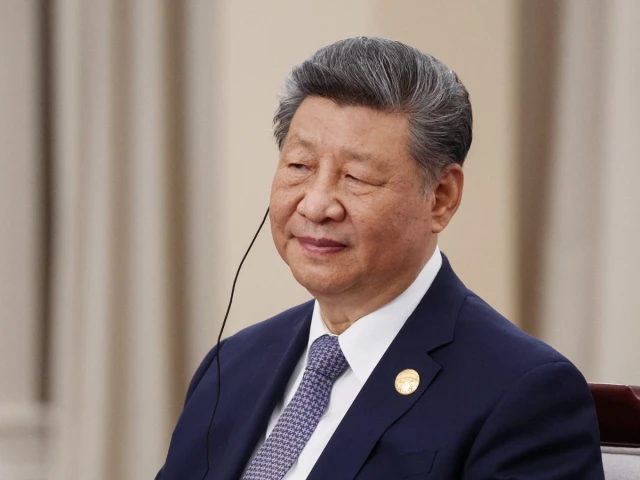
Chinese President Xi Jinping attends a meeting with Russian President Vladimir Putin on the sidelines of the Asia-Pacific Economic Cooperation (APEC) Leaders’ Summit in Shenzhen, Guangdong province, China November 18, 2026. PHOTO: REUTERS
Chinese President Xi Jinping on Wednesday called on Asia-Pacific economies to strengthen unity, uphold free and open trade, and deepen economic cooperation amid rising protectionism, unilateralism and uncertainty in the global economy, warning against turning inward in an increasingly turbulent world.
Addressing the APEC CEO Summit 2026 in Shenzhen, south China’s Guangdong province on Wednesday, Xi said the region must choose between opening up and closing its doors, working together and acting against each other, and adapting to change or clinging to outdated approaches.
According to the text of the speech released by Xinhua News Agency, the Chinese president urged APEC economies to forge ahead with resolve, jointly build an Asia-Pacific community and pursue prosperity for all, as China hosts the regional forum for the third time.
“Global growth lacks momentum, and unilateralism and protectionism are rampant,” Xi said, while noting that global trade continued to expand despite headwinds and technological breakthroughs were accelerating, reshaping the global economy.
Against this backdrop, he stressed that regional cooperation, rather than confrontation or isolation, was essential to navigating the challenges of the times.
Xi outlined four priorities for securing shared prosperity in the Asia-Pacific: maintaining peace and stability, strengthening openness and cooperation, harnessing innovation to drive growth, and ensuring development delivers benefits across economies and communities.
Read: Xi, Putin blast Western ‘protectionism’, sanctions before meeting Trump at APEC
On regional security, he said prosperity could not be sustained without security, nor security without stability. The relatively stable environment in the Asia-Pacific over recent decades had enabled steady economic progress and turned the region into a major engine of global growth.
He called for upholding the postwar international order, promoting an “equality-based and orderly multipolar world” and inclusive globalisation, while resolving differences through dialogue and consultation and tackling challenges through solidarity.
Emphasising the importance of trade and investment, Xi urged APEC members to safeguard the World Trade Organisation-centred, rules-based multilateral trading system, support free and open commerce, and ensure global industrial and supply chains remain stable and uninterrupted.
He also called for advancing the proposed Free Trade Area of the Asia-Pacific, strengthening regional connectivity and expanding cooperation in digital trade, cross-border e-commerce, smart customs and industrial supply chains.
Innovation, particularly in emerging technologies, was another key pillar of his vision for regional growth. Xi said APEC economies had contributed significantly to global scientific and technological progress, with unicorn companies, large artificial intelligence models and innovations transforming industries and reaching households.
He urged members to strengthen partnerships in science, technology and innovation, deepen cooperation in AI and the digital economy, and accelerate the green and low-carbon transition, saying innovation must be translated into tangible economic growth.
Read more: Xi pushes for global AI watchdog at APEC, pitches China as US trade alternative
Xi also stressed the need for balanced and inclusive development, arguing that economies with different histories, cultures and development levels could not be expected to follow a uniform approach.
He called for removing trade and investment barriers while ensuring development gains were shared more equitably, with greater economic and technical assistance for developing economies and cooperation in transport, public health, energy, food security and anti-corruption.
Highlighting the potential of regional economic hubs, Xi said the Asia-Pacific was home to some of the world’s most significant bay areas, characterised by open economies and interconnected markets.
He announced China’s support for establishing a World Association for Bay Areas Economic Cooperation to promote exchanges among major bay areas globally and explore new avenues for stronger economic collaboration in the region.
Turning to China’s economic outlook, Xi said the country had maintained momentum in high-quality, innovation-driven growth, with the economy expanding 4.6% in the first three quarters of the year.
He said new quality productive forces were developing at a faster pace, the country’s development pattern was being reshaped and its green transition was steadily advancing, describing the start of the 15th Five-Year Plan as positive.
The plan, he said, offered not only a blueprint for China’s development but also opportunities for the Asia-Pacific and the wider world, inviting international businesses to participate in China’s economic transformation.
Xi outlined three areas in which China would offer opportunities to global business communities — access to its vast consumer market, an innovation-driven environment for investment and development, and a more predictable and open business climate.
Also read: US pushes AI funding, fisheries tech at APEC amid China rivalry
Describing China as the world’s second-largest consumer market with the largest middle-income group, he said rising demand across sectors, including new energy vehicles, smart homes, the silver economy and ice-and-snow tourism, was creating fresh opportunities for foreign businesses.
He said China would further expand imports of quality goods and services and continue initiatives such as the “Export to China” series to facilitate access for international products to its market.
On industrial development, Xi said China was positioning itself as a major testing ground for emerging technologies, citing factory and agricultural robots, autonomous driving and drone delivery as examples of innovation being deployed in real-world settings.
He said Beijing would modernise its industrial system, integrate technological and industrial innovation, upgrade traditional sectors, expand emerging industries and plan ahead for industries of the future.
Reaffirming China’s commitment to multilateralism, Xi said the country had honoured its WTO accession commitments over the past 25 years and continued to support the multilateral trading system and WTO reform despite growing unilateralism and protectionism.
He said China would remain committed to win-win cooperation, high-quality Belt and Road development and sharing economic opportunities with other countries, while encouraging greater participation from Asia-Pacific businesses.
Xi also pledged further opening up, including tariff reductions, expanded market access and reforms in areas such as rules, regulations and standards, aimed at improving access to China’s manufacturing and services sectors and creating a more stable and predictable environment for foreign investment.
Concluding his address, Xi urged Asia-Pacific business leaders to embrace innovation, pursue excellence and expand cooperation, calling on them to contribute to regional economic integration and take part in China’s reform, opening up and modernisation drive.
“The Asia-Pacific is our home,” he said, urging regional economies to confront development challenges through openness, generate growth through innovation and pursue shared prosperity through cooperation.
He said the region must work together to build an Asia-Pacific community and secure a brighter future for its people.