Recognises ‘shiqaq’ as independent ground for dissolution where serious marital rupture persists
ISLAMABAD:
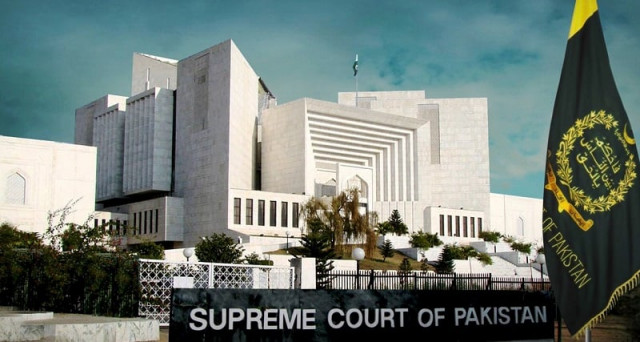
The Supreme Court has ruled that a family court cannot convert a woman’s plea for dissolution of marriage on statutory grounds into a decree of khula without her clear and voluntary consent, holding that such a conversion can unlawfully deprive her of her right to dower.
A five-member bench held that where reconciliation has failed and a marriage has descended into a serious and continuing rupture, the relationship may instead be dissolved on the ground of shiqaq under Section 2(ix) of the Dissolution of Muslim Marriages Act, 1939.
The bench – comprising Justice Shahid Waheed, Justice Naeem Akhter Afghan, Justice Muhammad Hashim Khan Kakar, Justice Ishtiaq Ibrahim and Justice Miangul Hassan Aurangzebissued the verdict while deciding two cases concerning Zainab Bibi and Iram Naz Begum.
The petitions were converted into appeals and partly allowed.
The court stressed that a marriage could be dissolved by a court, but neither spouse should be deprived of a lawful right or burdened with a stigma without a foundation in law and evidence.
Both women had approached the family courts seeking dissolution on the ground of cruelty, while also claiming maintenance, dower and dowry articles.
The courts found that cruelty had not been proved but, after reconciliation failed, dissolved the marriages through khula and directed the women to return or surrender dower.
The Supreme Court held that this approach was legally unsustainable because neither woman had elected khula as an alternative basis for dissolution.
Referring to Section 2 of the 1939 Act, the court observed that dissolution on statutory grounds, including cruelty, was distinct from khula.
While a statutory dissolution is based on an established matrimonial wrong or other prescribed ground, khula is a separate right of a woman to seek release from the marital bond when continuation of the marriage has become intolerable.
The bench cited earlier judgments, including Khurshid Bibi, Saima Khan and Dr Faryal Maqsood, holding that a suit for dissolution did not by itself constitute a suit for khula and that a court could not convert a statutory claim into khula without the woman’s clear and voluntary election.
The court particularly emphasised the financial consequences of the distinction.
Section 5 of the Dissolution of Muslim Marriages Act preserves a woman’s right to dower when a marriage is dissolved under the Act. Khula, by contrast, ordinarily carries consequences relating to surrender or return of the benefit received by the wife.
“Failure to establish cruelty does not authorise the court to manufacture an election of khula on behalf of the wife,” the judgment stated in substance.
The court, however, declined to simply set aside the dissolution of the marriages. It examined whether another legal ground existed on the evidence already available.
The bench focused on Section 2(ix), which permits dissolution “on any other ground which is recognised as valid for the dissolution of marriages under Muslim law”.
It held that shiqaq, meaning serious and continuing discord or rupture between spouses, could fall within this residuary provision where its factual requirements were established and reconciliation had failed.
The court sought the opinion of the Council of Islamic Ideology, which stated that where there was a serious breach between spouses, the parties could no longer live together in accordance with the purposes of marriage, fault could not fairly be attributed exclusively to one spouse and reconciliation had failed, the condition could constitute shiqaq recognised under Muslim law.
The bench stressed, however, that shiqaq could not be equated with every marital disagreement or incompatibility.
It said shiqaq required a genuine, serious and continuing rupture of such a nature that the essential purposes of marriage could no longer realistically be fulfilled, coupled with failure of meaningful reconciliation efforts. The court distinguished shiqaq from cruelty. Cruelty constituted a matrimonial wrong attributable to conduct falling within the statutory parameters of the 1939 Act, whereas shiqaq concerned the condition of the matrimonial relationship itself.