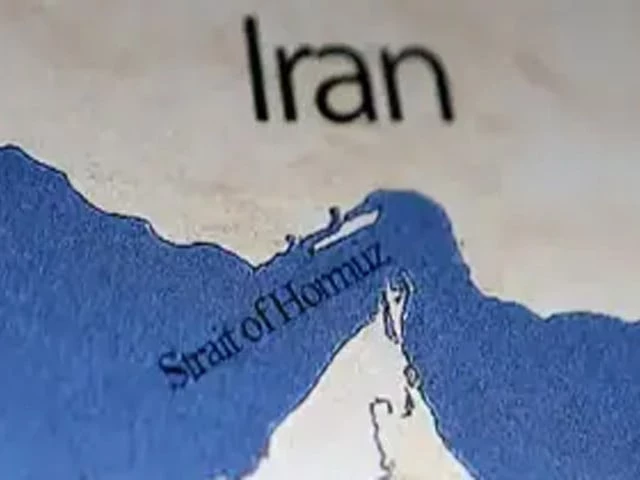
Iran has agreed with Oman to establish a temporary seven-mile-wide transit route through the Strait of Hormuz, Iranian Deputy Foreign Minister Kazem Gharibabadi said on Tuesday, while stressing that the arrangement does not amount to reopening the strategic waterway.
Speaking in an interview with Iranian television, Gharibabadi said the agreed route would run through Iranian territorial waters on entry, with part of the exit route also passing through Iranian waters.
“The agreed-upon width of the transit route with Oman in the Strait of Hormuz is seven miles,” Gharibabadi said, describing the route as a temporary arrangement.
He said Iran and Oman would hold further negotiations, which are expected to last between 30 and 60 days, to determine a permanent route and future arrangements for managing passage through the strait.
Gharibabadi emphasised that the agreement with Oman should not be interpreted as the reopening of the Strait of Hormuz.
“The Strait of Hormuz is closed, and we have complete control over it,” he said, dismissing claims that ships were already passing through the waterway.
According to Gharibabadi, activating the joint route agreed with Oman would also mean closing the southern passage. He said the two countries had agreed to begin technical negotiations on an alternative to the historical route.
Gharibabadi said Iran considered the strait a matter of national security and had the right to take measures it deemed necessary to protect its interests.
The official also said Iran did not trust Washington and that any return to diplomacy would require the United States to first fulfill its commitments under the Islamabad Memorandum of Understanding.
Read: Iran, Oman mull proposal for joint shipping route through Hormuz Strait
“Before any action to reopen the Strait of Hormuz, the US must fully implement all of its violated commitments,” he said.
“The reopening of the Strait of Hormuz will only take place in exchange for an end to the war on all fronts, the lifting of the blockade, and a resolution of Yemen’s status.”
Gharibabadi said Pakistani Army Chief Field Marshal Asim Munir had conveyed the same message during his recent visit to Tehran, telling Iranian officials that reopening the strait depended on Washington fulfilling its commitments.
‘No one except Iran knows the location of these mines’
Gharibabadi also rejected reports that US forces had cleared mines in the waterway or were preparing to send mine-sweeping vessels into the area.
“If the United States claims that the mines have been completely cleared, why doesn’t a US ship pass through?” he said. “If they have cleared them, why don’t they pass? No one except Iran knows the location of these mines.”
He warned that US mine-sweeping vessels entering the area would be considered targets.
“If US mine-sweepers enter the region, they will become targets for us,” Gharibabadi said, adding that US President Donald Trump’s comments about mine clearance were intended only to calm markets.
Earlier, Trump said that all mines have been successfully removed or detonated in the international waters of the Strait of Hormuz.
“Iran has been notified that any ship or boat placing new mines will be immediately and systematically destroyed,” he wrote on his social media platform Truth Social.
Egypt stresses importance of implementing US-Iran memorandum, de-escalation
Egypt on Tuesday stressed the importance of implementing the US-Iran memorandum of understanding and working to de-escalate tensions in the region, according to the Egyptian Foreign Ministry.
The issue was discussed during a phone call between Egyptian Foreign Minister Badr Abdelatty and US Special Envoy to the Middle East Steve Witkoff, a ministry statement said.
The call focused on regional developments and efforts to contain tensions and reduce escalation, according to the statement.
Abdelatty stressed the importance of upholding the US-Iran memorandum and implementing the understandings it contains.
He described the agreement as a constructive step toward easing tensions and strengthening security and stability in the Middle East.
Abdelatty also called for intensified regional and international efforts to de-escalate tensions and prevent the conflict from spreading.
He emphasised the need to prioritise political and diplomatic solutions and use dialogue to address the region’s crises, the ministry said.
The two officials also discussed the security and freedom of navigation along international waterways.
Abdelatty stressed the need to ensure safe and unrestricted navigation, prevent disruption to shipping and uphold relevant international law.
He underscored the importance of freedom of navigation to global trade, supply chains and energy security, as well as shielding international waterways from the impact of regional tensions and escalation.
Rubio says US not expected to launch new Iran strikes: Axios
Secretary of State Marco Rubio has told several foreign ministers from allied countries in recent days that “for the time being” the United States is not expected to launch new strikes against Iran, and will instead focus on other means of pressure, Axios reported on Tuesday, citing a US official and a second source with knowledge of the matter.