Faryal Talpur is scheduled to hold direct meetings with party workers, office-bearers during her visit to province
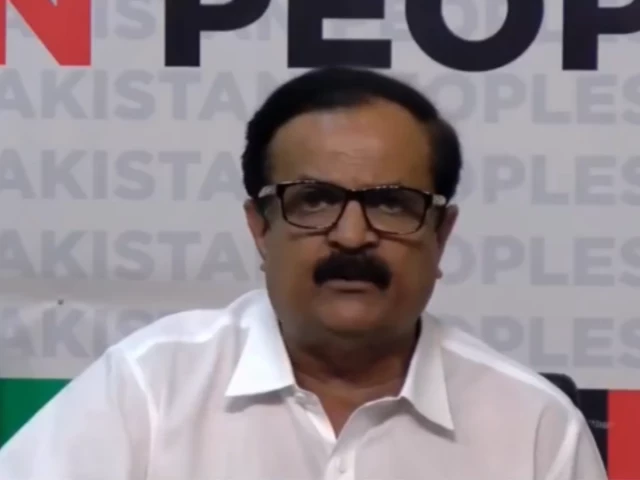
General Secretary PPP Punjab Syed Hassan Murtaza addressing a press conference in Lahore. SCREENGRAB
LAHORE:
Pakistan Peoples Party (PPP) Central Punjab General Secretary Syed Hassan Murtaza has called for the devolution of administrative and financial powers to the grassroots level through local government elections, arguing that the creation of new provinces would not resolve people’s problems unless the existing governance structure was reformed.
Addressing a press conference at the Punjab Secretariat, Murtaza said that instead of drawing the country into debates over new provinces and administrative units, the government should focus on providing relief from inflation, unemployment and rising electricity and petroleum prices.
He maintained that administrative shortcomings could not be addressed without empowering local governments and transferring authority to the grassroots.
Murtaza said the PPP believed in the Constitution and democracy, and that decisions concerning the country’s future must be taken through constitutional, legal and democratic procedures rather than according to the wishes of an individual or a particular group.
He also announced that the party would intensify its organisational activities across Punjab, with senior PPP leader Faryal Talpur scheduled to hold direct meetings with party workers and office-bearers during her five-day visit to the province.
She would hear their concerns, suggestions and organisational complaints, while consultations would also be held to strengthen the party structure and improve its prospects in future elections. He said several political personalities were also expected to join the PPP during the visit.
Murtaza said Talpur’s meetings would not be confined to Lahore but would extend to different districts and, wherever possible, tehsil-level organisations.
The party was also considering allocating two to three days every month for her visits to Punjab, with each visit focusing on a particular division.
Representatives of the People’s Lawyers Forum, People’s Youth, Pakistan People’s Students Federation, labour wing and women’s wing would also participate in the consultations.
He clarified that the initiative was not intended to establish a parallel organisational structure, adding that any recommendations for organisational changes would be submitted to the party chairman for approval in accordance with the party’s constitution.
New provinces debate
Commenting on the debate over the creation of new provinces, Murtaza said the PPP had already presented its position, backed by arguments, and proposed alternative solutions rather than merely opposing the idea.
He questioned why the government was discussing new provinces when it had failed to address administrative shortcomings in the existing system.
He said the 18th Constitutional Amendment had envisaged the transfer of powers from the federation to the provinces, but the process had not been completed at the grassroots level.
While authority had been devolved from the federal government to provincial governments, the latter had further concentrated powers instead of transferring them to districts and local governments through Provincial Finance Commission awards.
He questioned whether smaller districts were receiving their legitimate financial and administrative resources, saying development funds were frequently distributed on political considerations.
According to him, even basic development schemes, including the construction of streets and drainage systems, had become subject to discretionary political decisions.
Murtaza said holding local government elections and devolving powers to the grassroots had been among the fundamental commitments contained in the written agreement between the PPP and the government. However, despite repeated demands, meaningful progress had not been made.
He maintained that local governments, student unions and labour unions were essential institutions for producing new political leadership, particularly among young people and working-class communities.
Questioning the practical benefits of creating new provinces, he asked how such a move would reduce petroleum and electricity prices, eliminate unemployment, control inflation or improve law and order.
Referring to Islamabad, he said that despite the concentration of the country’s top political leadership, bureaucracy and administrative resources in the federal capital, serious shortcomings persisted in its healthcare system.
He questioned whether creating additional administrative units would achieve anything beyond increasing public expenditure.