Says smart lockdown was neither discussed in meeting chaired by deputy prime minister nor is it within my knowledge
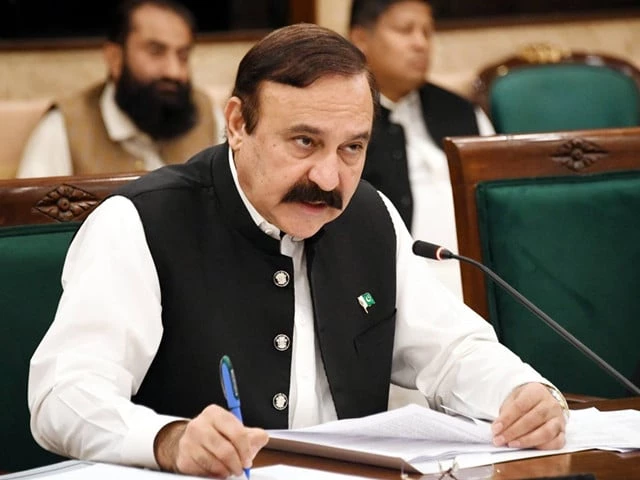
Federal Minister for Parliamentary Affairs Tariq Fazal Chaudhry. Photo: File
Minister for Parliamentary Affairs Dr Tariq Fazal Chaudhry on Tuesday rejected reports that the government was considering imposing a smart lockdown in the country amid rising fuel prices linked to tensions in the Middle East.
“Smart lockdown was neither discussed in the meeting chaired by the deputy prime minister nor is it within my knowledge. The meeting chaired by the deputy prime minister was regarding petroleum products,” Chaudhry told reporters in Islamabad.
His remarks came after reports emerged that the government was considering imposing a smart lockdown to cope with a worsening petroleum situation. Rising tensions in the Middle East have pushed global oil prices higher, while attacks on Saudi energy infrastructure have raised concerns over global fuel supplies. Saudi Arabia also shut down its East-West oil pipeline after the vital conduit came under aerial attack.
Chaudhry said the government was providing targeted subsidies for three-wheelers and vehicles up to 800cc for three months. He added that public representatives were being assigned responsibilities to guide people about the scheme.
Read More: Govt details registration process for Rs100 petrol subsidy
Commenting on political protests, the minister criticised Pakistan Tehreek-e-Insaf (PTI), saying the party’s marches had often resulted in violence and disruption.
He said the Islamabad High Court’s recent decision directed the administration to ensure that citizens’ movement remained uninterrupted.
“Public places cannot be allowed to be occupied by leaders of any political party,” he said.
Chaudhry said Islamabad would not be shut down and assured that authorities would ensure the smooth movement of citizens.
He said the administration was performing its duty and those repeatedly attempting to move towards Islamabad should reconsider their approach.
Responding to PTI’s demands, he said, “If they think they are coming to change the system, will the system change because of their arrival?”
“Will the prime minister resign just because they ring the bell at the prime minister’s door and ask him to step down?” he added.
The minister said Prime Minister Shehbaz Sharif had repeatedly invited opposition parties for dialogue.
Referring to Khyber-Pakhtunkhwa Chief Minister Sohail Afridi’s visit to Lahore, he criticised the conduct of political leaders.
“The scenes witnessed in Lahore yesterday reflect political immaturity; nothing could be more disrespectful to a public office,” he said.
“You are the chief minister of a province. Sometimes you sit on a vehicle and sometimes on a footpath. Every chief minister is respected by us; you should respect the dignity of your office,” Chaudhry added.
A day earlier, the government detailed the process for applying for its targeted petrol subsidy, announced by PM Shehbaz as a special relief scheme offering a Rs100-per-litre reduction in petrol prices for motorcycles, rickshaws, Qingqi rickshaws and cars with engines of up to 800cc.
Furthermore, Information Minister Ataullah Tarar said consultations were under way on bringing back some of the previous austerity measures as renewed hostilities in the Middle East threaten to push up oil prices and disrupt fuel supplies.
While addressing a press briefing, Tarar said PM Shehbaz had directed consultations on the austerity measures, some of which, he noted, “are still in force, such as market timings”.
Tarar added that “austerity measures previously taken [..] were being reviewed to assess which of the previous measures need to be revived in the present situation”.
He said a decision would be taken soon.
The austerity measures were announced on March 9 to mitigate the economic impact of the ongoing US-Iran war. They included a 50 per cent cut in fuel allowances for official vehicles, salary cuts for lawmakers and a partial work-from-home policy in the public sector.
The government ended the measures on June 19, except for market timings. However, in July, it emerged that the government was considering reverting to fuel conservation and austerity measures.
To cope with the crisis, the government introduced a daily petroleum pricing mechanism in July, replacing the previous weekly system, as global oil prices became increasingly volatile amid geopolitical tensions. Since then, repeated price increases have pushed petrol to Rs380.24 per litre and high-speed diesel (HSD) to Rs409.42 per litre.
Oil prices rose as concerns over supply disruptions persisted after attacks on Saudi Arabian energy infrastructure left the kingdom’s East-West pipeline offline and cast doubt on efforts to ease shipping risks in the Gulf.
Brent crude futures rose $1.37, or 1.3%, to $107.05 a barrel, while US West Texas Intermediate futures were up $1.53, or 1.51%, at $102.92 a barrel. Both benchmarks rose more than 1% in the previous session.
Commodity vessel traffic through the Strait of Hormuz dropped to fewer than 10 transits a day over the weekend, from a 10-day average of 14, raising concerns over a route that typically carried about one-fifth of global oil supplies before the US-Israeli war on Iran began on February 28.
Also Read: Govt increases petrol price by Rs4.42, HSD by Rs6.10 per litre for Sept 15
Saudi Arabia could begin to exhaust oil available for export within days unless it restores operations on the East-West pipeline, potentially removing as much as 4% of global oil supply from the market, according to Saudi buyers and traders. The world’s biggest exporter has used the pipeline to reroute around 4 million barrels per day — around 4% of global supply — to the port of Yanbu on the Red Sea.