
Writes to relevant departments to nominate representatives from the ISI, IB, Pakistan Rangers (Sindh) and NCCIA
KARACHI:
The Sindh government on Saturday formed a joint investigation team (JIT) and separate committees to implement the recommendations of a judicial commission probing the death of Mir Raza Ali, whose killing was initially treated by police as suicide but was later ruled a murder by the commission.
Raza, a graduate who ran a waffle-making business under the banner Wafflix, went missing from his PECHS residence in the early hours of July 28. Later, his body was found within the jurisdiction of Gulistan-e-Johar Police Station. A post-mortem was conducted at Jinnah Hospital, and the body was buried the same day.
Police initially opined the death to be a suicide. The family contested this, claiming the body bore visible torture marks. The commission recorded that the police surgeon, in early August, pointed out anomalies in the first post-mortem report — the very document police had relied upon for their suicide theory. The body was exhumed on August 8, initial findings were shared on August 8–9, and the final official report, issued around August 31, confirmed the cause of death as “a perforating firearm injury from the back, ruling out suicide”.
According to an official letter, Deputy Inspector General (DIG) Irfan Baloch will head the JIT, which will include senior representatives from the Inter-Services Intelligence (ISI), Intelligence Bureau (IB), Pakistan Rangers Sindh and the National Cyber Crime Investigation Agency (NCCIA).
The Sindh government has written to all relevant institutions, requesting them to nominate officers of grade 18 or above as members of the JIT.
The home department has also written to the inspector general of Sindh Police regarding action against police officers and personnel named in the judicial commission’s report. The commission’s observations and the recommendations of the cabinet’s subcommittee have been forwarded to the provincial police chief.
In a separate letter, the home department has written to the health secretary regarding the judicial commission’s observations. On the commission’s recommendation, the cabinet’s subcommittee has proposed removing Dr Osama Sheikh from his post and requiring him to undergo two years of training.
A separate committee has also been proposed to investigate Raza’s death, with the Sindh government writing to the Ministry of Interior to nominate a Federal Investigation Agency (FIA) officer of grade 20 or above to head it, in line with the judicial commission’s recommendations.
Separately, a one-member committee comprising Additional Inspector General of the Counter Terrorism Department (CTD) Zulfiqar Ali Larak has been formed to review the roles of police officers and personnel named in the judicial commission’s report.
The committee will operate under four terms of reference (ToRs): reviewing the role of every officer and official named in the commission’s report and assessing their capabilities and performance in light of its specific observations; evaluating the overall policing performance of the nominated officers and personnel; conducting further investigations into Inspector Ghaus’s role in the burning of the crime scene; and submitting a report to the Sindh inspector general of police containing findings and recommendations regarding each officer and official.
Judicial Commission recommends JIT
A case that began with a missing young man and a police theory of suicide has exposed what a judicial commission has described as a deeply flawed investigation, compromised evidence and a breakdown of public trust so severe that even the identification of the actual killer may not convince the public.
The single-member Judicial Commission probing the death of 25-year-old Raza has recommended a joint investigation team (JIT), led by DIG Irfan Baloch and comprising senior representatives of the ISI, IB, Pakistan Rangers (Sindh) and the NCCIA, to establish the truth.
Read more: Mir Raza case: Commission says Dr Usama targeted Dr Summaiya with smear campaign
In a scathing assessment, the commission termed the police investigation an “epic failure”, warning that the trust deficit between the Sindh police and society had become “nearly unrectifiable” in this case.
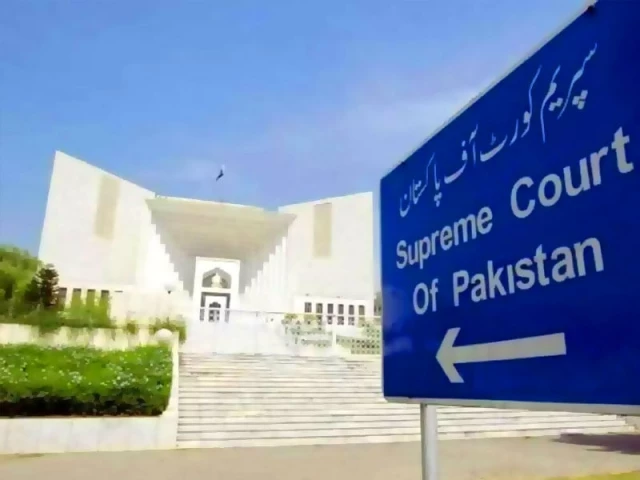
Headed by Sindh High Court Judge Justice Omar Sial, the commission submitted its report to the provincial chief minister on October 15, 2026.
‘It was a murder’
The commission concluded that the available medical and physical evidence was incompatible with suicide. “The bullet trajectory, the unusual location of the wound for a self-inflicted injury, the absence of blood, the state of the body, the principles of medical jurisprudence, acid burns and the anesthesia detected in the blood, all clearly excluded suicide as the cause of death. It was a murder,” the report stated.
Police probe under fire
The commission found that the police had failed in their most basic responsibility: establishing the truth. It said the suicide hypothesis rested on a handful of unconfirmed text messages, selectively obtained video footage and a preliminary post-mortem report that did not itself conclude that the death was a suicide.
The report also pointed to contradictions between the first and second reports prepared by Dr Osama Shaikh, further weakening the police position.
Describing the investigation as “a rudderless ship, not aware of its destination”, the commission said the possibility of an active cover-up in the initial stages “cannot be conclusively ruled out”.
Medical board controversy
The commission described the change in medical board as a “highly irregular, inexplicable, legally flawed overreach”, attributing it to officials at the upper levels of the Sindh Health Secretariat, particularly the secretary and special secretary.
It further observed that the director-general of health services had “looked the other way”, despite being aware that he lacked the legal authority to constitute such a board. “The two gentlemen who directed the change in the Board could not give a cogent reason for the abrupt change,” the report stated.
JIT and criminal accountability
With a significant portion of the physical evidence compromised, the commission said the case had reached a critical juncture at which a conventional police investigation was unlikely to restore public confidence.
It warned that even an accurate conclusion or the apprehension of the actual culprit might not be accepted by the public because of the severe breakdown in trust..
The commission also called on the police to acknowledge their operational failures, apologise transparently and initiate formal inquiries against the officers responsible.