SC seeks details of Imran’s meetings with sisters, orders release of full medical record
ISLAMABAD:
The Supreme Court (SC) on Tuesday sought a complete record of Pakistan Tehreek-e-Insaf (PTI) founder Imran Khan’s meetings with his sisters over the past three years and ordered authorities to provide his full medical record, as Justice Shahid Waheed questioned why the former prime minister was being denied access to his family.
The hearing came after a medical board report submitted to the SC on Monday recommended more frequent meetings between Imran and his immediate family and spouse to help manage his blood pressure and anxiety, highlighting concerns over the former premier’s blood pressure (BP). In February, it was revealed by a report prepared by Barrister Salman Safdar on the SC’s direction that Imran had informed officials that his right eye was functioning at only 15% capacity. Safdar submitted the report to a two-member bench. As a result, the SC ordered that Imran be granted access to his personal physicians in Adiala Jail.
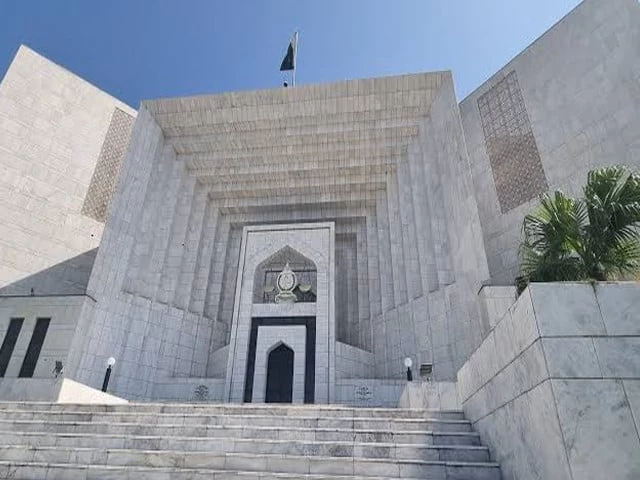
A three-member bench headed by Justice Shahid Waheed was hearing cases concerning Imran’s access to his sisters and personal physicians, as well as his medical record.
The court was told that Imran’s sisters had been allowed 48 meetings with him over the past three years. The court sought the complete record of those meetings, as well as details of calls between the PTI founder and his children.
The court also questioned why Islamabad High Court (IHC) directions regarding meetings with Imran were not being implemented and summoned Adiala Jail authorities at the next hearing. The authorities were directed to explain why the high court’s order had not been complied with.
The court also sought Imran Khan’s complete medical record, with Justice Waheed telling the Islamabad Advocate General, “We want Imran Khan’s complete record; we do not want a summary.”
Read: Medical board urges concessions for Imran
“What prevents you from providing the complete medical record of Imran Khan?” the judge asked.
Justice Naeem Akhtar Afghan noted that the report submitted to the court stated that an angiography was required and asked whether the procedure could be performed in jail.
The Islamabad Advocate General replied that it could be conducted at a hospital outside the jail.
“Imran Khan’s pulse is not normal, nor is his heart,” Justice Shahid Waheed remarked, adding that according to medical reports, his vital organs had started to be affected.
During the hearing, Uzma Khanum, Imran’s sister, was stopped from speaking by Justice Naeem Akhtar Afghan, who told her that she had a lawyer present and should not speak.
Her lawyer, Uzair Bhandari, assured the court that the sisters would not hold a media talk outside the jail following their meeting with Imran. He also requested that the founder’s personal physician, Dr Asim Yusuf, and Uzma be allowed to meet him.
“If anyone violates the law, the meeting will not take place,” the Islamabad Advocate General said.
“If he is violating the law, will you also violate it?” Justice Shahid Waheed asked. “Meeting his sisters is not a favour; it is their fundamental right,” Justice Waheed added.
Read more: Imran’s vision has returned to ‘almost normal’ after treatment, Adiala SP tells SC
The court also sought Imran’s complete medical record, with Justice Waheed questioning why it could not be provided. He observed that the material submitted to the court was only a summary of the medical report.
“Once the record comes to the court, it will no longer remain confidential,” Justice Shahid Waheed said.
The judge also referred to medical reports indicating that Imran’s organs had started to be affected in jail, that he had a heart problem and was suffering from mental distress. “Do not politicise Imran Khan’s illness,” Justice Naeem Akhtar Afghan remarked, urging the parties to focus on his well-being.
Bhandari said the reason behind Imran developing a blood clot should come to light.
The court also sought complete details of the cases against the PTI founder, including the number in which he is an under-trial prisoner, the cases in which he has been convicted and those in which his sentences have been suspended.
Bhandari said they did not want what happened in 1979 to happen again.
The hearing was adjourned until after the summer vacation.
Also read: Fact check: Imran Khan was not recently taken to PIMS
Imran and Bushra Bibi remain incarcerated in Rawalpindi’s Adiala Jail. They were sentenced on December 20, 2025, to 17 years in prison in the Toshakhana-II case, which pertains to allegations that the couple unlawfully retained a Bulgari jewellery set gifted by the Saudi crown prince during an official visit to Saudi Arabia.
Imran has been in custody since August 2023, serving a sentence in a £190 million corruption case. He also faces pending trials under the Anti-Terrorism Act in connection with protests on May 9, 2023.
New medical report surfaces
A medical report submitted to the Supreme Court found that Imran had been experiencing fluctuating blood pressure, palpitations, headaches, restlessness and significant anxiety. He was examined by a PIMS cardiologist on August 1, who recorded his blood pressure at 140/100mmHg and recommended measures to reduce his mental stress, including more frequent meetings with his wife and access to reading material.
A four-member medical board that examined him on August 10 recorded his blood pressure at 140/80mmHg and recommended one hour of walking and relaxation, as well as more frequent interaction with his immediate family and spouse to help control his anxiety and blood pressure.
The report said Imran had undergone at least 39 medical check-ups since his incarceration, with jail medical officers checking him three times a day. It also said his ECG was normal and that his vision had improved to almost normal following treatment for an eye condition. The jail administration maintained that he was receiving adequate healthcare and regular medical monitoring.
PTI, however, questioned the authenticity and completeness of the medical documentation and demanded that Imran be examined by his personal doctors, Dr Asim Yusuf and Dr Faisal Sultan, as well as an independent medical board.
The government rejected claims that Imran was being denied proper medical care. Adviser to the Prime Minister on Political and Public Affairs Rana Sanaullah told the Senate that Imran was receiving the best available treatment from specialists and that his medical care and jail meetings were being conducted in accordance with the law and relevant court orders.