Says the PTI should act like a political party and time has come to make some crucial decisions in K-P
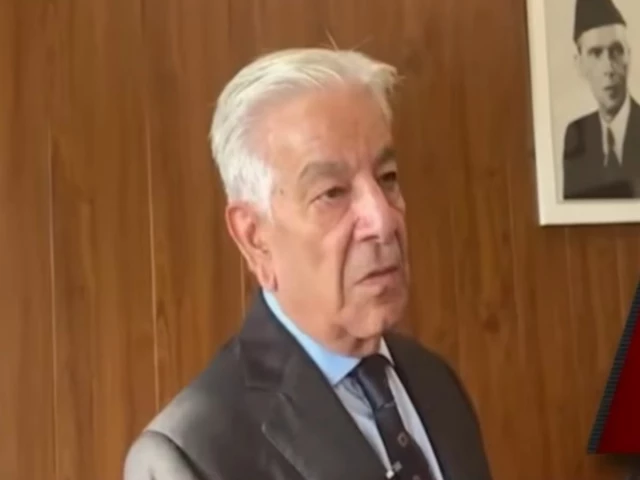
Defence Minister Khawaja Asif. SCREENGRAB
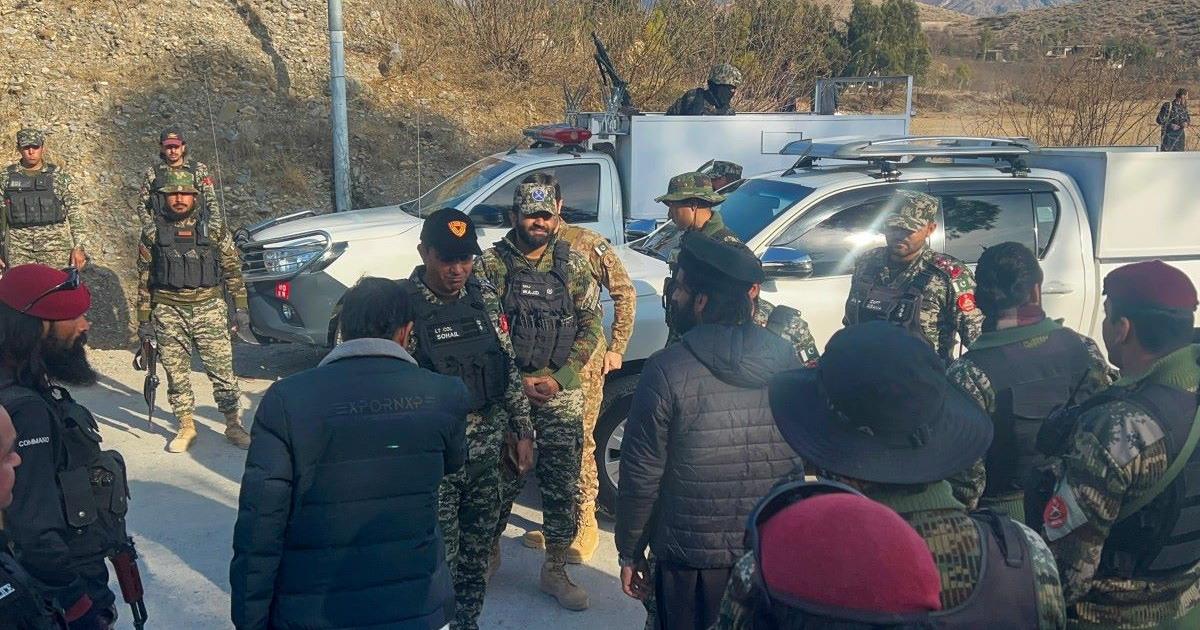
Defence Minister Khawaja Asif on Wednesday said the government was trying to avoid imposing governor’s rule in Khyber-Pakhtunkhwa, but warned that it could resort to the option if no other way was left.
Speaking to reporters in Islamabad, the minister said that there was nothing impeding the imposition og governor’s rule in the province, but the government was trying not to use what he described as the “last option”.
“If there is no other way left, then we can use that option,” he said.
Asif also criticised the Pakistan Tehreek-e-Insaf (PTI), urging it to “play the role of a political party rather than a terrorist organisation”.
“We cannot leave the capital at their mercy so that every two or three months they join hands with the Taliban and march on the capital,” he said.
The minister described the Taliban as an “anti-Pakistan power” and said that if the PTI allied with it and attacked the capital, the government had the right and responsibility to protect Islamabad.
He referred to the PTI leadership’s alleged failure to attend the funerals of people killed in Taliban attacks and its failure to condemn explosions, claiming that these factors indicated, in his view, that the Taliban had a militant component within the K-P government.
Asif also described the PTI’s planned long march as an “attack on Islamabad”, saying previous attacks on the capital had also been motivated by political parties’ efforts to establish their credibility within their own ranks.
He attributed the failure of talks between the government and opposition to internal differences within the PTI.
“Differences within the PTI have intensified,” he said, adding that members of the PTI sitting in the National Assembly, its negotiating team and even its allies wanted a solution to the issue that was acceptable to the entire country.
Asked about the PTI’s demand for a meeting with Imran Khan before deciding whether to postpone its long march, Asif said he did not know about it.
Also Read: Govt will not accept demands by ‘holding state hostage’, Sanaullah warns PTI
He instead urged the PTI to look at its record.
“Look at your past. When we were imprisoned, what facilities did you provide us? Did you keep us at the Marriott?” he said.
Asif reiterated that the PTI should act as a political party rather than a terrorist organisation.
Later, in a post on X, Asif accused the K-P government of having “complete collusion” with terrorists and said there were ample examples and evidence of what he called a “facilitator ecosystem”, which, he said, could not be tolerated.
He criticised the provincial government for what he described as “complete detachment” from terrorism in the province and “criminal indifference”.
The minister said the PTI provincial government was focused on its “so-called failed political long march” while its alleged facilitators had unleashed a fresh wave of terrorism against the people of K-P.
پی ٹی آئی کی صوبائی حکومت کی صوبے میں دہشت گردی سے مکمل لاتعلقی اور مجرمانہ بے حسی جاری …بس بہت ہوگیا!!!
پی ٹی آئی کی صوبائی حکومت نام نہاد ناکام سیاسی لانگ مارچ کے لیے سڑکوں پر گھوم رہی ہے جب کہ ان کے سہولت کاروں نے اِسی دوران KPK کے لوگوں کے خلاف ایک تازہ دہشت گردی کی لہر…
— Khawaja M. Asif (@KhawajaMAsif) October 7, 2026
He referred to the Oct 6 attack in Dera Ismail Khan, saying five people had been killed, including two customs officials.
“Completely numb to this serious matter, the entire provincial cabinet, including the chief minister, is fully engrossed in their political failed long march,” he said.
Asif accused the provincial government of neither condemning the deaths nor offering condolences to the families of the victims, attending their funerals or visiting their homes.
“This is inexcusable by any standard,” he said.
He further criticised the chief minister for allegedly scheduling a late-night meeting to reprimand the inspector general of police and chief secretary for attending the governor’s security meeting.
According to Asif, the chief minister and his cabinet had “completely abandoned” the people of the province to the mercy of terrorists.
He claimed that people in various parts of K-P were protesting against the provincial government.
“This can no longer be tolerated. Enough blood of K-P’s people has been spilt,” he said, alleging that there was “complete collusion” between the provincial government and terrorists.
Read More: PTI long march enters fourth day, heads to Khyber as party rallies behind K-P CM
The minister also contrasted the PTI government’s treatment of the Pakistan Muslim League-Nawaz leadership with what he described as the PML-N’s conduct while in opposition.
He said Nawaz Sharif, his family and the PML-N leadership had been imprisoned during the PTI’s tenure, but the PML-N had continued to perform its parliamentary role under the Constitution.
“It did not hold the country and institutions hostage. It fought a legal and constitutional battle in the courts and parliament. It did not ally with the Taliban,” he said.
Asif said the time had come to make “crucial decisions”, adding that K-P could no longer be left “at the mercy of incompetent, insensitive rulers and Taliban allies”.
He also warned against putting the unity of the country at risk, saying an entire province could not be “held hostage”.
The issue of Governor’s Rule has become a major point of contention between the federal and K-P government. On September 21, Interior Minister Mohsin Naqvi said the government was consulting the law ministry on legal options for the province, including Governor’s Rule, if the PTI proceeded with its long march. Two days later, however, Information Minister Atta Tarar ruled out any plan to impose Governor’s Rule, saying the federal government had no intention of removing the PTI administration.
Some federal ministers publicly raised the possibility of federal intervention in K-P. Federal Minister for Kashmir Affairs Amir Muqam said consultations were under way on the “constitutional and legal option” of imposing Governors’ Rule.
Afridi, however, rejected the warnings and said he would not retreat from his position because of threats of Governors’ Rule or an emergency. He also said PTI supporters could take to the streets at short notice if an attempt was made to remove him.
However, amid the speculation, just days before the PTI’s planned long march, the prime minister and the president formed a committee last week to negotiate with the PTI and other opposition parties over the march, while expressing concern over the province’s deteriorating law and order situation.
The government and opposition parties held negotiations over two days, and the talks initially appeared to be bearing fruit. However, just as the two sides were nearing agreement on most of the contentious issues, a deadlock emerged, bringing the negotiation process to a halt.
The government blamed the K-P government, particularly Afridi, for the deadlock and failure of the negotiations. The PTI, however, claimed that the talks broke down over its demand for a meeting with the party’s founder, which the government refused to accept.
As the negotiation process collapsed, CM Afridi began his long march towards Islamabad, further escalating tensions between the two sides, with both sides continuing to trade allegations.
As tensions peaked, PM Shehbaz once again entered the fray and extended an olive branch to the PTI, saying the government was prepared to engage with the opposition if the party ended its long march and sit-ins.
The PTI, however, rejected the offer as its march continued towards Islamabad, entering its fourth day on Wednesday. The convoy moved from Mattani towards Khyber, with Khyber-Pakhtunkhwa Chief Minister Sohail Afridi leading the procession.