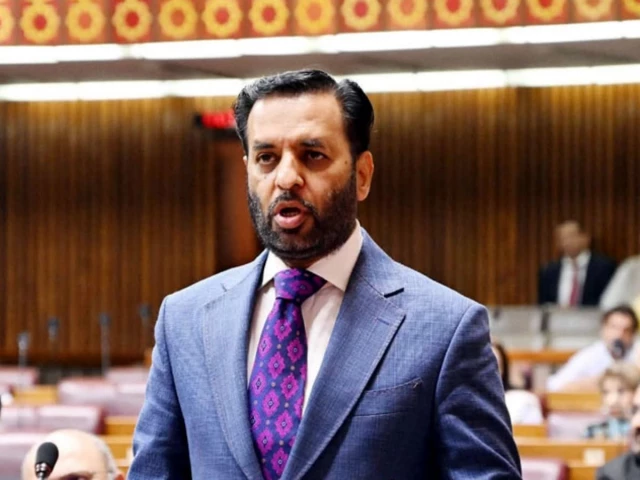
Health Minister Mustafa Kamal. Photo: Radio Pakistan
Health Minister Mustafa Kamal told the National Assembly (NA) on Tuesday that the government capped annual fees at private medical colleges at Rs2.1 million, with institutions barred from charging more without approval, as authorities moved to tighten oversight of medical education costs, state-run Radio Pakistan reported.
Responding to a Calling Attention Notice on high fees at medical colleges and private hospitals during the NA session, Kamal said a committee formed by the prime minister had reviewed medical college fees and set a standard fee structure.
He said private medical colleges accounted for 65% of the country’s 22,000 medical seats, while the remaining 35% were in government institutions.
Parliamentary Secretary for National Health Services, Regulations and Coordination Nelson Azeem said the committee had initially fixed the fee at Rs1.8 million per student. Some colleges challenged the decision, arguing that they offered better facilities and services and faced higher expenses. The committee asked them to justify their demands on the basis of their facilities and expenses.
A total of 61 medical colleges submitted appeals along with relevant documents. After reviewing the appeals, the committee found the cases of 35 institutions justified and allowed them to charge Rs2.1 million. Azeem said a portal had also been established for students and their parents to submit complaints against medical colleges.
He said notices had been issued to 45 institutions and action would be taken against them if they failed to submit the required taxes or justify their fees.
He said private medical colleges were required to follow the fee structure determined by the committee. Another committee had also been formed to take action against institutions that failed to implement the decisions.
Kamal told the house that around 96,000 students had passed the MDCAT last year, but only about 22,000 had secured places in medical colleges. As a result, many Pakistani students had gone abroad to study medicine, particularly to Central Asian countries, where, he said, the standard of education was not always satisfactory.
Read: NA session adjourned over quorum
He said the Pakistan Medical and Dental Council (PMDC) had published a list of recognised foreign medical colleges on its website to help students make informed choices.
Kamal said students who had passed the MDCAT should be given preference for medical education abroad. He added that Pakistani students spent around $800 million in foreign exchange on medical education overseas.
He said the number of seats in government medical colleges remained limited, while the government had imposed a three-year moratorium on the establishment of new private medical colleges. The moratorium, he clarified, did not apply to government institutions.
Government medical colleges were increasing their intake as they expanded their infrastructure, he said, adding that private medical colleges accounted for 65% of the roughly 22,000 students admitted to medical colleges each year.
Azeem said the government was facilitating students through government-recognised seats, with applicants to private medical colleges being allocated institutions according to the preferences they had listed on their admission forms.
He said many graduates of Pakistani medical colleges chose to move abroad, including to the United States and the United Kingdom, while those who stayed in Pakistan continued to serve the public.
Doctors who had qualified abroad were required to pass a PMDC test before they could practise in Pakistan, he said. The test was aimed at protecting patients and ensuring that doctors met the required standards. Those who passed were issued certificates and were also eligible to work in government institutions.