
Baghaei says Washington must ‘behave like a responsible govt’ before any negotiations can begin
Iranian Ministry of Foreign Affairs, spokesperson Ismail Baghaei. Photo: X
Iran said Monday that it is not currently engaged in negotiations with the United States and that any future talks would depend on Washington changing its conduct.
Addressing a press briefing, Foreign Ministry spokesman Esmaeil Baghaei dismissed reports that Tehran had sought negotiations with the US. “That does not accord with our principles. Claims that Iran has requested negotiations are merely reports,” Baghaei said in his comments carried by the semi-official Mehr news agency.
He said Iran has consistently viewed diplomacy as a tool for safeguarding its interests. “We have never hesitated to use diplomatic tools to protect our national interests. We consider diplomacy a means of protecting Iran’s national interests,” he said.
While acknowledging that mediators may be conveying messages between the two sides, Baghaei said: “At the present time, we are not conducting any negotiations with the American side.”
Read: Pakistan, Iran explore path towards new talks with US in a China-initiated push, sources say
Asked about Iran’s conditions for starting negotiations, Baghaei said the US “must first demonstrate more responsible behaviour.”
“The United States must learn how to behave like a responsible government,” he said, accusing Washington of acting “like a mafia gang” over the past one to two years by disregarding international law. “As long as this behaviour continues, we cannot hope to create a favourable public atmosphere,” he added.
On Sunday, Iranian military spokesperson Amir Mohammad Akraminia said the US had halted its attacks over the previous two days and that Iran’s “counter-operations” had also stopped.
According to an Axios report on Saturday, US President Donald Trump had directed the US military not to launch new strikes on Iran, ending nearly two weeks of daily attacks.
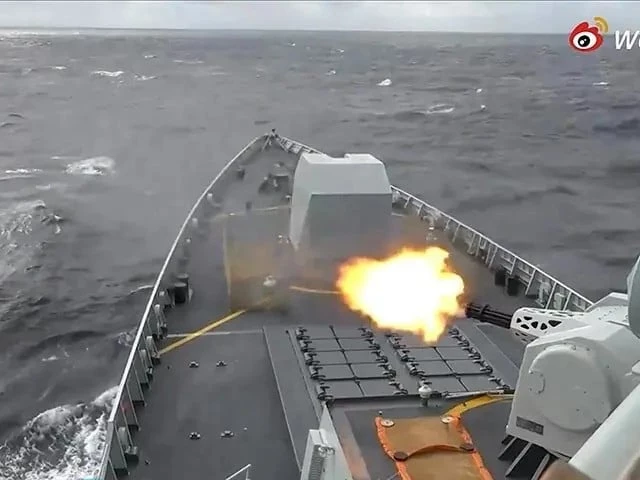
Tensions between the US and Iran have intensified in recent weeks, with Washington carrying out attacks on Iran and Tehran responding by targeting what it said were US military facilities and equipment in countries across the region.
Trump launched his renewed bombing campaign to punish Iran after Tehran fired on ships using a route through the Strait of Hormuz that has been promoted by the US, which has told vessels to sail close to the coast of Oman.
Iran says ships may pass only through a channel that runs closer to its own coast, which it controls and where it intends to impose transit fees.
The two weeks of renewed US bombing killed scores of people in Iran and destroyed bridges and tunnels across the south as well as military targets. Four US service members were killed by Iran’s return fire against US bases in neighbouring Arab states. Iran also struck civilian infrastructure in Gulf countries in what it said was retaliation for US strikes on civilian targets.
Last week, Iran’s Houthi allies threatened to extend the disruption to global oil supplies to a second major waterway by announcing a blockade of Saudi Arabia’s oil industry in the Red Sea, sending oil prices even higher.
The halt to the renewed US bombing campaign leaves no clear indication of what leverage Washington can exert to achieve Trump’s aim to break Iran’s grip on the strait.
Read More: Dar urges Iran, US to build on Islamabad MoU
Washington and Tehran reached an agreement in June on a framework for talks meant to take place by the end of August to resolve major issues such as Iran’s nuclear programme.
But the sides have disputed the meaning of the memorandum’s language about the Strait of Hormuz, with Washington insisting it requires Tehran to allow free travel while Iran says it grants it the authority to supervise transit.
Iran aims to formalise its control over the strait by reaching an agreement with Oman, which controls the opposite shore. A senior Omani delegation was in Tehran over the weekend discussing the future of the strait.
Israel’s Prime Minister Benjamin Netanyahu, who launched the war in February alongside Trump but has not participated in the US-Iranian negotiations to end it, is due to meet Trump in Washington.