
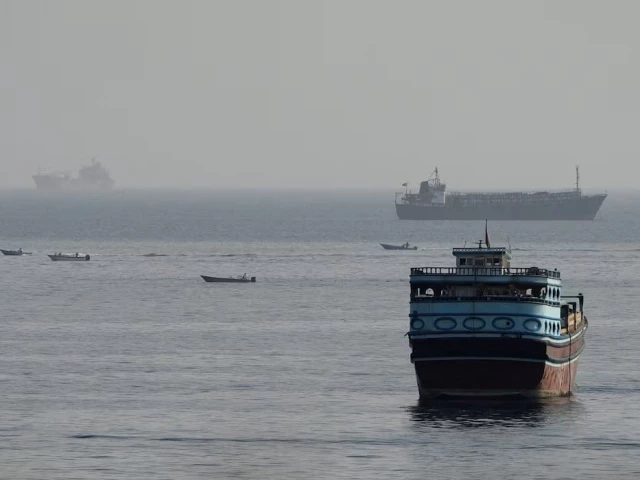
Commodity vessel transits remain lower than month’s daily average as shipping risk persists
Vessels in the Strait of Hormuz, as seen from Musandam, Oman, August 3, 2026—REUTERS
Shipping traffic at the Strait of Hormuz fell below the month average towards the end of the week due to volatile sentiment between the United States and Iran, with both countries making competing claims over its control.
The Strait of Hormuz is “under Iran’s control and management”, the recently appointed head of Iran’s Basij paramilitary unit said on Thursday.
Meanwhile, the US on Thursday said it could maintain a naval blockade of Iran indefinitely and would ratchet up economic pressure on Tehran as ceasefire talks have floundered.
Read: ‘I think we will keep it’: Trump says US has ‘total control’ over Strait of Hormuz
Commodity vessel transits at Hormuz picked up slightly on Thursday, but remained lower than the month’s daily average of 12, based on Kpler data in August so far.
A total of nine vessels transited the strait on Thursday, up from five the previous day, according to Kpler data. The nine vessels included five entries heading into the Gulf and four exits into the Gulf of Oman, mostly via the Iranian shipping route.
Shipping risk persisted. Abu Dhabi National Oil Company said two of its vessels were attacked while transiting the Strait of Hormuz on Thursday evening, with no injuries reported, as the United Arab Emirates accused Iran of carrying out the attack.
Read More: Why has the Iran-US ceasefire memorandum frayed?
Meanwhile, 19 commodity vessels passed through the Bab el-Mandeb strait on Thursday with their transponders on, broadly stable from 20 on the previous day, Kpler data showed.
Some vessels may be sailing at the key waterways with their transponders turned off, which is not considered in the counts.