Security of each country is an integral part of collective security of the three countries, says spokesperson
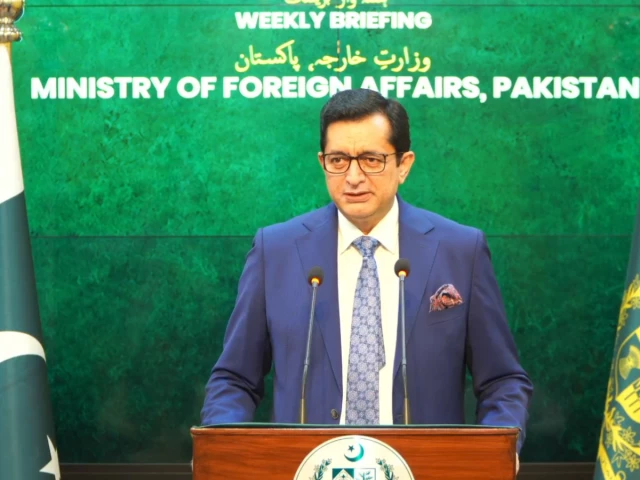
Foreign Office spokesperson Sajjad Haider Khan speaks during the weekly press briefing in Islamabad on Friday. SCREENGRAB
Foreign Office (FO) spokesperson Sajjad Haider Khan said on Friday that the Makkah defence alliance between Pakistan, Turkiye and Saudi Arabia was intended to defend the three countries against aggression and the allied forces would not launch attacks inside Yemen.
Addressing a weekly press briefing in Islamabad, the spokesperson said the three countries had agreed to move towards the practical implementation of their collective defence commitments under the Makkah Joint Defence Agreement (MJDA), with the three countries approving measures to strengthen military readiness, integration and coordination, Foreign Office spokesperson Sajjad Haider Khan said on Friday.
The decision includes measures to provide agreed military forces and capabilities and ensure their rapid deployment in Saudi Arabia, in accordance with approved arrangements and the national laws of the three countries.
“The Committee also decided to move towards the practical implementation of collective defence commitments and approved measures to enhance readiness, military integration and the collective capacity of the three countries to confront these threats,” Khan said.
The meeting brought together the foreign ministers, defence ministers and chiefs of general staff of Pakistan, Saudi Arabia and Türkiye to review regional developments and cooperation under the agreement.
“The Committee reviewed the security situation and threats facing the Kingdom of Saudi Arabia, reaffirmed its commitment to collective defence and strongly condemned attempts to target Makkah and Madinah, as well as attacks on cities, civilians as well as on the economic infrastructure,” Khan said.
At a recent meeting of the three countries’ defence cooperation forum, it was decided that appropriate mobilisation would take place as required, he said.
The alliance’s organisation and headquarters would decide the extent of deployment, as well as when and where it would take place. Member countries would make the necessary contributions accordingly, he added.
Responding to questions about the alliance’s military deployments, the spokesperson said that following the signing of the Strategic Mutual Defence Agreement (SMDA) between Pakistan and Saudi Arabia last year, there had been further deployments.
“Since 1982, the Pakistan Armed Forces have been present in Saudi Arabia in one capacity or another, sometimes under logistical arrangements and sometimes as part of training missions,” he said.
Asked whether allied forces could engage Houthi forces in Yemen, Mr Khan said the alliance was meant to defend the three countries against aggression and would not launch attacks from within Yemeni territory.
“These forces would not cross the border into Yemen to launch attacks against the Houthis,” he said, adding that they would be used to defend Saudi territory and safeguard its sovereignty.
The spokesperson also categorically rejected reports that Pakistani fighter jets had been involved in cross-border operations, describing them as false.
“This is speculative news, which has also been refuted by the minister for information,” he added.
He added that the three countries had approved measures to strengthen their collective defence capabilities.
“The parties reaffirmed that the security of each country is an integral part of collective security of the three countries and reiterated their determination to defend their security, sovereignty and territorial integrity in accordance with the provisions of the Makkah Agreement,” Khan said.
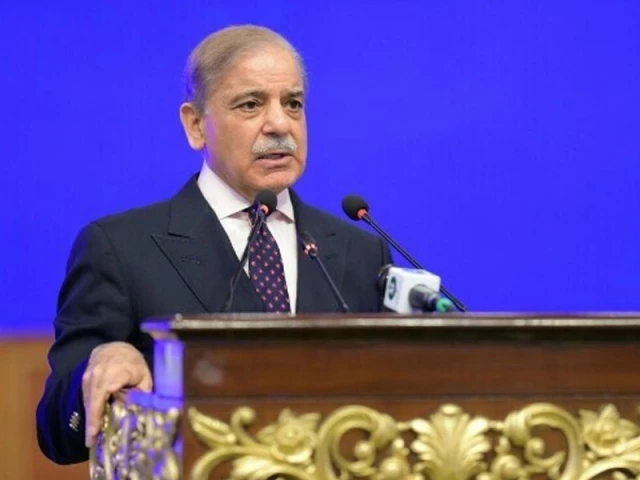
The move came amid repeated attacks by Yemen’s Houthi movement on Saudi Arabia. Khan said Prime Minister Shehbaz Sharif had strongly condemned the attacks and praised the vigilance of Saudi forces and the coalition in protecting civilian lives.
Pakistan had also condemned a Houthi attack on the Tayeba power distribution station in Medina on October 2, describing it as deeply reprehensible and a grave provocation. Islamabad had stressed the importance of protecting the sanctity of the two holy mosques and the safety of worshippers and pilgrims under all circumstances.
On August 7, Pakistan, Saudi Arabia and Türkiye formalised their longstanding strategic relationship through the MJDA, a trilateral security framework intended to strengthen collective deterrence, enhance military cooperation and promote regional stability.
The agreement established a framework for collective defence, under which an armed attack on any one of the three countries would be considered an attack on all three. It built on longstanding military cooperation and followed nearly a year of negotiations amid heightened instability across the Middle East.
The three countries had also reaffirmed their commitment to collective defence at a meeting on September 25, when senior military leadership strongly condemned attacks targeting the holy city of Makkah.
Separately, Khan rejected a statement by Afghanistan’s foreign minister accusing Pakistan of supporting the Islamic State Khorasan Province (ISKP).
Pakistan categorically rejected the accusation, he said, adding that the Tehreek-e-Taliban Pakistan (TTP), the Balochistan Liberation Army (BLA) and other terrorist organisations had found safe havens in Kabul and elsewhere in Afghanistan.
He said Pakistan had conveyed the precise locations of these groups to the Afghan authorities at both the political and security levels.
The spokesperson said the military strikes had been highly precise and targeted specific locations where militants were planning and facilitating further attacks against Pakistan. He described the accusations against Pakistan as unfounded.
Khan also rejected allegations concerning Nuristan and said the situation in Afghanistan needed to stabilise.
“The Afghan government must take ownership of the issue and stop facilitating and supporting terrorists who enter Pakistan from Afghanistan and create problems there,” he said.
Reaffirming Islamabad’s long standing stance, the spokesperson said that Pakistan wanted to maintain friendly and good relations with Afghanistan.
UN chief’s visit and Pakistan’s diplomatic engagements
Khan also outlined the visit of United Nations Secretary-General Antonio Guterres to Pakistan from October 6 to 8, saying it had reaffirmed the country’s longstanding partnership with the organisation and provided an opportunity to discuss regional and international developments.
During his talks with Dar on October 6, discussions covered regional and international peace and security, Palestine, Jammu and Kashmir, Afghanistan, terrorism, peacekeeping, sustainable development, climate change and multilateralism.
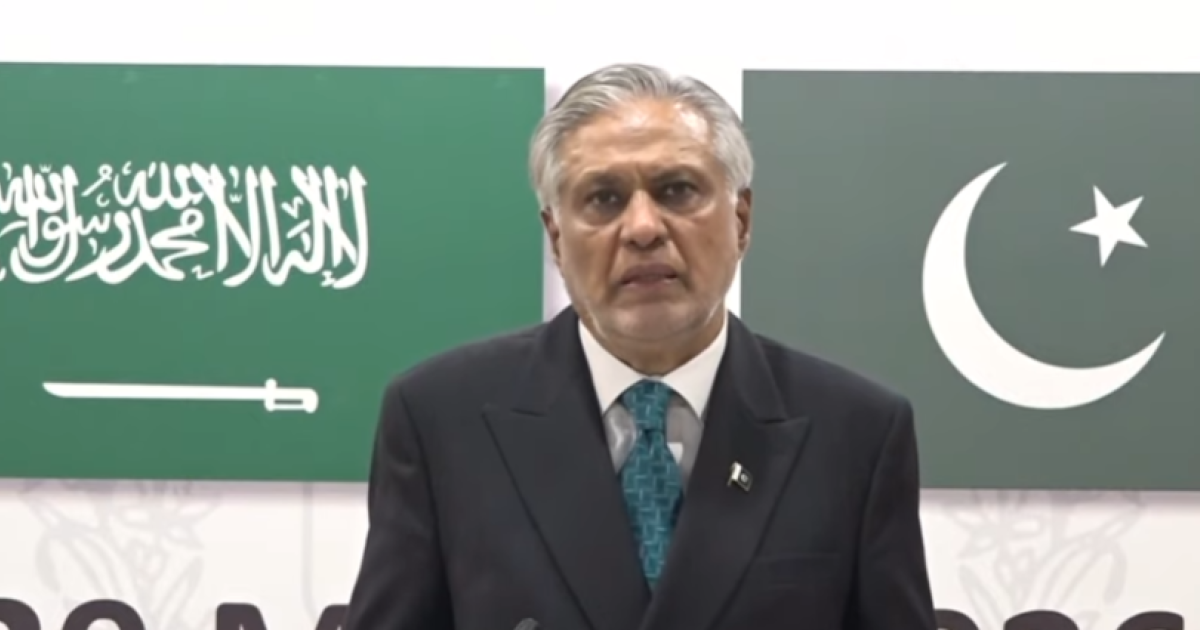
“The Deputy Prime Minister briefed the Secretary General on Pakistan’s efforts for dialogue and de-escalation, reiterated Pakistan’s position on Jammu and Kashmir, raised concerns over India’s decision to hold the Indus waters treaty in abeyance and highlighted the continued use of Afghan soil for terrorist attacks against Pakistan,” Khan said.
Guterres also met President Asif Ali Zardari, who conferred the Nishan-e-Imtiaz on him in recognition of his international service and contribution to global peace and development.
Also Read: Pakistan committed to ‘negotiated and peaceful outcome’ between US, Iran: DG ISPR
The UN chief met Prime Minister Shehbaz Sharif, Chief of Defence Forces and Chief of Army Staff Field Marshal Asim Munir and Interior Minister Mohsin Naqvi during the visit. He also visited the headquarters of the United Nations Military Observer Group in India and Pakistan (UNMOGIP) and attended a briefing on Pakistan’s disaster preparedness and early warning capabilities at the National Disaster Management Authority.
Khan said Dar had reaffirmed Pakistan’s commitment to the UN Charter, international law and the peaceful settlement of disputes, while Guterres had stressed the need for stronger multilateral cooperation and a more representative and effective United Nations.
On Pakistan-UK relations, Khan said British Minister of State for the Middle East, North Africa, Afghanistan and Pakistan Stephen Doughty met FM Dar on October 6. The two sides reviewed bilateral relations and reaffirmed their commitment to strengthening cooperation in trade and investment, education, security and other areas of mutual interest.
“They also exchanged views on regional and international developments and agreed to work towards early operationalisation of the UK-Pakistan bilateral political consultations and dialogue,” he said.
Khan also said FM Dar met Belarusian National Security Adviser Lieutenant General Alexander Volfovich on October 7. The two sides reviewed bilateral relations and expressed satisfaction with the positive momentum in ties, reaffirming their commitment to further cooperation.
Read More: PM Shehbaz condemns Houthi attacks on Saudi Arabia, calls for immediate halt
Bahrain’s Foreign Minister Dr Abdul Latif bin Rashid Al Zayani visited Pakistan from October 7 to 8 at the invitation of Dar. The two foreign ministers held discussions on bilateral cooperation and regional developments and co-chaired the third session of the Pakistan-Bahrain Joint Ministerial Commission.
“The two sides reviewed the entire spectrum of bilateral relations and discussed ways to further strengthen cooperation in trade, investment, economic, defence and security ties, labour and manpower, cultural exchanges and other areas of mutual interest,” Khan said.
The two sides also exchanged views on regional and international developments and cooperation at multilateral forums.
Khan said Archbishop Paul Richard, Secretary for Relations with States and International Organisations of the Holy See, had arrived in Pakistan on October 8 for a three-day visit. It was the first visit to Pakistan by a secretary for relations with states and international organisations of the Holy See and coincided with the 75th anniversary of diplomatic relations between Pakistan and the Holy See.
During his meeting with Dar, the two sides discussed interfaith harmony, dialogue and peace, as well as regional and international developments.
Pakistan protests Indian border killings
Khan said Pakistan had lodged a strong protest with India after two Pakistani civilians were killed by Indian Border Security Force personnel in the Bedian sector of Lahore along the international border on October 2.
The Indian charge d’affaires was summoned to the Foreign Office on October 3, and Pakistan rejected what it described as the unprovoked and disproportionate use of lethal force against unarmed civilians.
Islamabad called on India to conduct an immediate, transparent and credible investigation, take appropriate legal and disciplinary action against those responsible and share its findings with Pakistan.
“India was also urged to respect international law, fundamental human rights, relevant bilateral arrangements and established border procedures, exercise maximum restraint and take effective measures to prevent such recurrences in the future,” Khan said.
MT Honour 25 crew members repatriated
Khan said four injured Pakistani crew members of the MT Honour 25, along with the remains of three Pakistani nationals, had been repatriated from Addis Ababa to Karachi on October 4. The remaining three crew members returned to Pakistan on October 7.
Pakistan’s missions in Djibouti and Addis Ababa had facilitated their stay and return, he said.
Dar raises Indus Waters Treaty at international symposium
Khan also highlighted Dar’s keynote address, delivered by video link to the International Water Symposium in Vienna on October 6. The event was organised by Pakistan’s embassy in Austria in collaboration with the Diplomatic Academy of Vienna.
The symposium brought together diplomats, academics and experts to discuss water security, transboundary river governance and obligations under international law.
In his address, Dar condemned what Pakistan described as India’s weaponisation of water, reaffirmed Islamabad’s commitment to the Indus Waters Treaty and referred to a Court of Arbitration award, saying the treaty remained in force and its obligations had to be respected.
“He underscored that shared water should remain instruments of peace and cooperation, not coercion, and reiterated Pakistan’s commitment to defending its rights under the treaty,” Khan concluded.