Islamabad Communique endorses mediation efforts. Members welcome Iran’s conflict resolution initiative
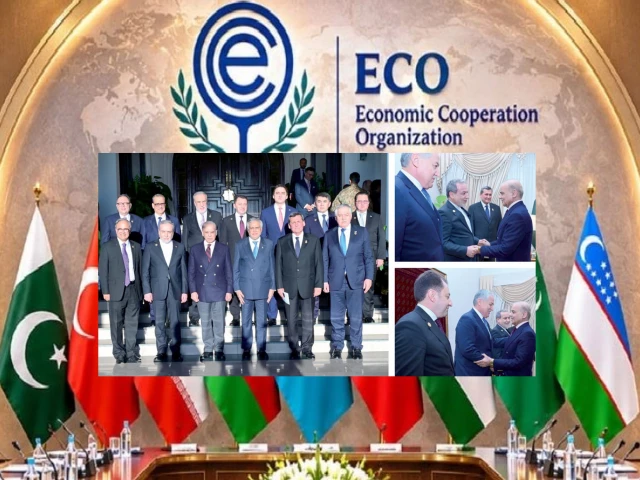
: Prime Minister Shehbaz Sharif poses with ECO foreign ministers and greets delegates arriving for the Islamabad meeting. PHOTOS: EXPRESS
ISLAMABAD:
The Economic Cooperation Organisation (ECO) on Monday threw its collective weight behind Pakistan’s diplomatic efforts to end the Iran-US conflict, welcoming Tehran’s latest peace initiative and calling for a complete and permanent termination of the war, in a significant regional endorsement of Islamabad’s mediation efforts.
The Islamabad Communique, adopted at the 30th meeting of the ECO Council of Ministers, specifically appreciated Pakistan’s role in facilitating the Islamabad peace talks and the resulting Islamabad Memorandum of Understanding (MoU), as well as its participation in subsequent negotiations in Burgenstock, Switzerland.
The 10-member regional organisation also expressed support for the mediation efforts undertaken by Pakistan and Qatar and welcomed Iran’s recent initiative aimed at achieving a “dignified resolution” of the conflict and ensuring the “complete and permanent termination” of the ongoing war.
The communique, while expressing concern over the challenging geopolitical environment, called for restraint, dialogue and diplomatic engagement, reaffirming the importance of resolving disputes through diplomacy, respect for international law and mutual trust.
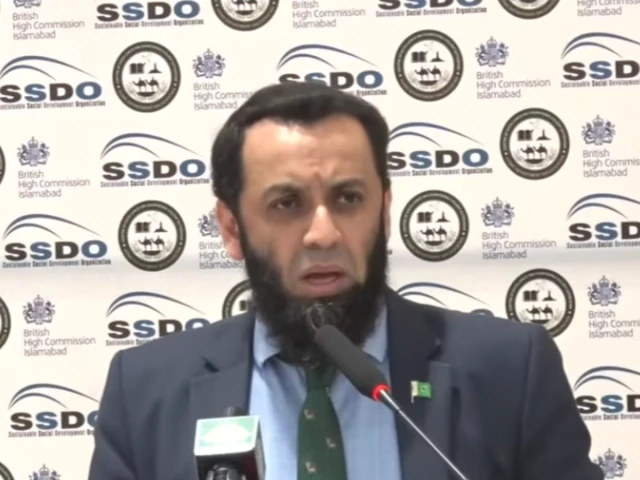
Speaking at a news conference after chairing the ECO ministerial meeting, Deputy Prime Minister and Foreign Minister Ishaq Dar reiterated that Pakistan had not abandoned hopes of bringing Washington and Tehran back to the negotiating table.
Dar said Islamabad was still awaiting Washington’s response to Iran’s latest proposals and would continue pursuing diplomatic efforts. “We have discussed the latest situation. The response from the US is pending. We have not given up on our efforts. We are still trying. Let’s hope for the best,” he said.
Dar’s remarks followed his meeting with Iranian Foreign Minister Abbas Araghchi, who visited Islamabad to attend the ECO meeting. The two foreign ministers discussed the latest regional developments, particularly the Iran-US conflict and ongoing efforts to revive the diplomatic process.
Dar said the earlier proposal envisaged a seven-day period for the diplomatic process, but the timeline had now been fast-tracked to two days. He did not disclose further details about the proposed arrangement or the response Islamabad was expecting from Washington.
Separately, the Islamabad Communique also commended Qatar for its role as a trusted facilitator of international diplomacy, particularly its mediation efforts at the 81st session of the United Nations General Assembly.
It also rejected unilateral coercive measures, sanctions and economic pressures, including their extraterritorial effects, saying such measures were contrary to the UN Charter and international law and undermined global economic stability, supply chains and the provision of food, medicines, energy and humanitarian assistance.
The endorsement provides a significant multilateral dimension to Pakistan’s mediation efforts at a time when Islamabad is seeking to prevent further escalation and restore diplomatic engagement between the United States and Iran.
Makkah Pact meeting
Dar announced that Islamabad would host a high-level meeting of the Makkah Joint Defence Agreement in the last week of November, bringing together senior civil and military leadership from Pakistan, Saudi Arabia and Turkiye.
Explaining the agreement, Dar said it was essentially defensive in nature and based on the principle that an attack on one member would be treated as an attack on all three. “This region should have its own regional security structure,” he said, adding that the arrangement was not directed against any particular country.
He said the institutional framework of the alliance – signed by Pakistan, Saudi Arabia and Turkiye on August 7 – was being developed and the forthcoming Islamabad meeting would review its progress as well as the evolving regional security situation.
Afghanistan’s absence
Dar’s news conference also focused extensively on Pakistan’s strained relations with Afghanistan, with the foreign minister reiterating that Islamabad’s principal demand from the Taliban authorities was verifiable action against terrorist groups operating from Afghan territory.
Asked why Afghanistan had not been invited to the ECO ministerial meeting despite being a member Dar said the ECO Secretariat had suspended its membership. “Yes, in the past, Taliban representatives attended some sub-ministerial meetings. The ECO Secretariat can shed more light on that,” he said.
The Islamabad Communique acknowledged the need for continued consultations with member states to address Afghanistan’s engagement with ECO, with a view to ensuring its full and effective participation once circumstances permit.
In its decisions, the communique called for meaningful progress on the concerns of member states to lay the basis for Afghanistan’s participation in ECO activities and processes.
Dar, meanwhile, made it clear that Pakistan’s position towards Kabul remained unchanged, insisting that Islamabad had only one demand: verifiable action against terrorist groups using Afghan territory to launch attacks against Pakistan.
“We have only one demand: action against terrorists. We have fulfilled all our commitments. What happened to the one ask?” he said.
He defended Pakistan’s decision to close the border, saying Islamabad had been left with no alternative after its security concerns remained unaddressed. However, he pointed out that Pakistan had continued to facilitate the entry of humanitarian assistance into Afghanistan despite the restrictions.
“We want Afghanistan to prosper. We have no issues with them,” Dar said, adding that Pakistan remained willing to resume normal economic engagement if the Taliban authorities took verifiable action against terrorist groups. “You name a terrorist group, it is there in Afghanistan,” he said.
Earlier, addressing the ECO Council of Ministers, Iranian Foreign Minister Abbas Araghchi called for stronger regional cooperation in trade, transport and energy, arguing that countries in the region needed to develop their own security arrangements and reduce dependence on external powers.
He said Iran had remained committed to diplomacy and peaceful solutions over the past two years but accused the United States of pursuing a different course through aggression, threats, targeted assassinations, economic pressure and blockades.
Araghchi maintained that the territory, airspace and facilities of regional countries should not be used as platforms for attacks against one another. He said Iran’s defensive measures were directed at the military facilities and bases of those attacking it and should not be construed as actions against neighbouring countries or their people.
Against the backdrop of disruptions to key regional shipping and energy routes, particularly the Strait of Hormuz and Bab al-Mandab, Araghchi called for a reliable and sustainable regional energy mechanism to safeguard supplies and strengthen collective resilience.
He proposed making trade, transport and energy the three strategic pillars of ECO cooperation and called for a more effective and inclusive regional trade agreement.
2035 economic strategy
The 30th ECO Council of Ministers meeting was held under Pakistan’s 2026-27 chairmanship of the organisation, with the theme “Reviving Regionalism for a Resilient ECO”. The meeting adopted the Islamabad Communique and the Strategic Goals of Economic Cooperation 2035, setting out a framework for regional integration, connectivity and economic cooperation over the next decade.
Dar identified five priorities for Pakistan’s chairmanship: expanding trade and investment, strengthening regional connectivity, advancing the ECO Trade Agreement, building regional resilience and promoting human development.
The communique called for accelerated amendments to the ECO Trade Agreement (ECOTA), stronger intra-regional trade, improved customs procedures and the development of joint trade zones to facilitate cross-border commerce.
It also emphasised the need to strengthen transport and transit corridors, improve access for landlocked member states to international seaports and reduce the cost and time involved in the movement of goods.
The member states further the adoption of the ECO Five-Year Roadmap on Minerals Cooperation for 2026-2030, the first overarching regional framework for cooperation in the minerals sector, including critical minerals essential for emerging technologies.
The document also called for greater cooperation in artificial intelligence, digital connectivity, energy security, agriculture, climate resilience and sustainable development.
On international issues, the communique expressed concern over the humanitarian situation in Gaza, particularly following flooding in the Deir al-Balah area on November 6 and the onset of winter.
It called for urgent delivery of food, medicines, fuel, tents, blankets and other essential supplies, an end to forced displacement and full implementation of the October 2025 ceasefire agreement.
The communique also welcomed the designation of Lahore as the ECO Tourism Capital for 2027, followed by Mary in 2028, Karakol in 2029 and Aktau in 2030.
The ministerial session followed a senior officials’ meeting on Sunday, chaired by Foreign Secretary Asim Iftikhar Ahmad, which finalised the agenda and draft Islamabad Communique.
Iran will host the 18th ECO Summit in Tehran on December 3-4, where regional leaders are expected to provide strategic guidance for implementing the organisation’s new economic goals. Pakistan is expected to host the next ECO Council of Ministers meeting and summit in 2027.