He says Pakistan stands in unwavering solidarity with Saudi Arabia and its people
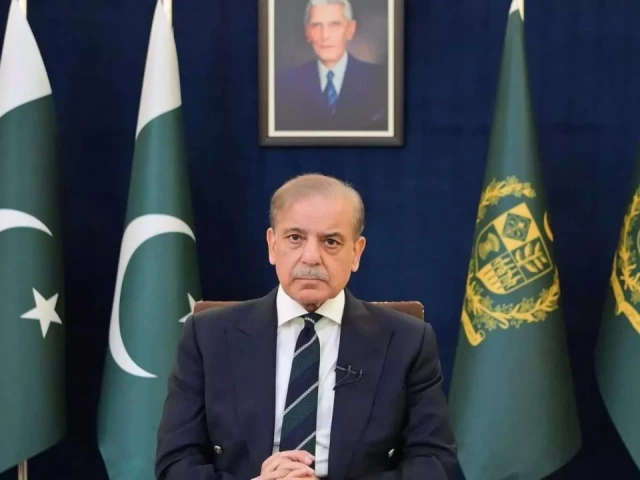
PM Shehbaz Sharif set a committee to review Telecommunication Reorganization (Amendment) Bill. PHOTO: APP
Prime Minister Shehbaz Sharif on Saturday strongly condemned the Houthi attack on the King Abdullah Financial District in Riyadh, describing it as an act of “reckless aggression” targeting civilian infrastructure and economic facilities.
In a post on X, the prime minister said such acts were “totally unacceptable” and threatened regional peace and stability.
I strongly condemn the Houthi attack on the King Abdullah Financial District in Riyadh. Such acts of reckless aggression, targeting civilian infrastructure and economic facilities, are totally unacceptable and threaten regional peace and stability.
Pakistan stands in unwavering…
— Shehbaz Sharif (@CMShehbaz) November 21, 2026
He said Pakistan stood in “unwavering solidarity” with Saudi Arabia and its people, adding that Islamabad fully supported the Kingdom’s right to defend its sovereignty and territorial integrity and protect its citizens and residents.
PM Shehbaz said Pakistan would continue to support all efforts for lasting peace and stability in the region.
Read: Pakistan calls Houthi attack on Riyadh tower ‘grave violation’ of Saudi sovereignty
Saudi-led coalition fighting Yemen’s Houthis said on Saturday it had intercepted and destroyed three ballistic missiles fired towards Riyadh, marking the second Houthi attack on the Saudi capital in a few days, after its tallest skyscraper was struck on Thursday, Reuters reported.
A Reuters witness saw a projectile streak across the sky in Riyadh shortly before hearing a loud bang. The projectile left a trail of smoke in the sky.
The latest attack followed an escalation in cross-border strikes on Friday, when the Saudi-led coalition said it had struck the Red Sea port of Hodeidah and carried out operations targeting Houthi missile and drone capabilities in the capital, Sanaa.
The Houthis threatened to target Saudi Red Sea ports, warned airlines to avoid Saudi airspace, and claimed attacks on a power station and port in southern Saudi Arabia.
On Thursday, a Houthi attack damaged the Public Investment Fund tower, the headquarters of Saudi Arabia’s sovereign wealth fund and the tallest skyscraper in Riyadh.
On October 26, Pakistan strongly condemned “reprehensible” Houthi ballistic missile attacks on October 24, which had targeted the Makkah and Madinah regions of Saudi Arabia, including areas in the vicinity of the holy sites.
On October 24, Saudi Arabia’s Civil Defence briefly issued alerts warning of potential danger in Taif and Yanbu, as well as the holy city of Makkah and its second-largest city, Jeddah. A Saudi-led coalition fighting Yemen’s Houthis said it destroyed two ballistic missiles fired by the group towards Taif and Yanbu, as fighting between the sides continued.
Read more: Pakistan condemns ‘reprehensible’ Houthi attacks in Makkah, Madinah regions
The condemnations came following the September 2025 Strategic Mutual Defence Agreement between Pakistan and Saudi Arabia, which established a framework for joint defence, and the subsequent trilateral Makkah Joint Defence Agreement signed on August 7 involving Turkiye.
According to the Makkah agreement, an armed attack against any one of the three signatory states would be regarded as an attack against all three, establishing a framework for collective deterrence and expanded defence cooperation. The agreement has since been followed by efforts to translate its commitments into closer military coordination.
The Saudi-led coalition said the Houthis had launched 20 attacks on King Khalid International Airport in Riyadh in October, killing 17 people and injuring 333 others. Abha airport in southwestern Saudi Arabia was also targeted amid renewed hostilities.
Yemen’s civil war reignited in July after a UN-brokered truce collapsed, months into a wider Middle East war. Saudi Arabia and the Yemeni government have since claimed hundreds of strikes on Houthi-held territory. The Houthis say the attacks have killed civilians, including women and children. Reuters could not independently verify those claims.
The Saudis entered the Yemen war in 2015 at the head of an Arab coalition to try to force the Houthis out of the Yemeni capital , Sanaa. The war became a bloody stalemate, with hundreds of thousands of Yemenis killed by fighting and famine.
A 2022 ceasefire reached by the Saudis and the Houthis unravelled this summer, culminating in a lightning Houthi advance that took the Red Sea chokepoint of Bab el-Mandeb from Saudi-backed government forces.