Yahya Akhunzada appointed first administrator of council as federal govt to supervise body representing locals
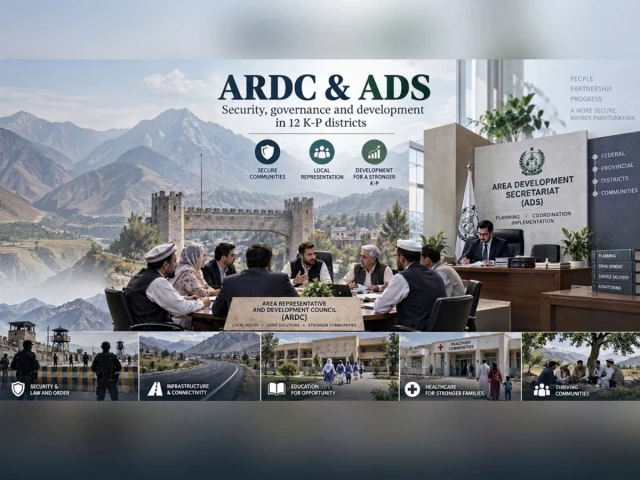
The Area Representative and Development Council (ARDC) was set up with the primary purpose of representing the people of the 12 troubled districts, identifying local issues and addressing development needs under the supervision of the federal government, while an Area Development Secretariat (ADS) was also established to run the council.
Bureaucrat Yahya Akhunzada was appointed as the first administrator of the council. The administrator will be an empowered decision-maker, entrusted with full operational and administrative powers to maintain peace in the troubled areas, run development projects and take timely decisions so that peace, security, terrorism and administrative matters can be handled effectively, on time, and in consultation with the council.
Following the imposition of emergency measures and governor’s rule in Khyber-Pakhtunkhwa (K-P) after the federal cabinet approved the recommendation and Prime Minister Shehbaz Sharif advised President Asif Ali Zardari to invoke Articles 232 and 234 of the Constitution, Zardari signed the summary, transferring executive authority from the provincial government to Governor Faisal Karim Kundi.
Read: Governor’s rule imposed in K-P for fourth time
The federal government then formed an 11-member advisory council to oversee administrative affairs in the province, ordering the immediate establishment of the ADS in the 12 designated districts which include Dera Ismail Khan, Tank, Lakki Marwat, Bannu, Bajaur, Mohmand, Khyber, Kurram, Orakzai, North Waziristan, Upper South Waziristan, and Lower South Waziristan.
The government also notified that the ADS would operate under the supervision of the ARDC.
Under the supervision of the federal government, and together with the provincial government, the secretariat will make decisions on security, peace, development and administrative matters in the 12 districts, together with the security forces and law enforcement agencies, and in full consultation with the ARDC.
Council members will be nominated on the basis of the population of the relevant areas and districts, along with the tribal representation of the relevant areas and districts. The process is moving ahead rapidly and will be completed in the next few days, after which the federal government will issue an official notification of the appointments. Council members will be appointed for the duration of the imposition of the emergency or for a period determined by the federal government.
The council will elect a chairman and a vice chairman from among its members, who will ensure its leadership, coordination and effective communication. It will meet every 15 days, while the ARDC can summon a meeting at any time if required. Council members will also be part of the District Coordination Committees of the relevant districts, in order to improve communication and harmony between local representatives and administrative institutions.
Further, based on local needs and public demands, the council will identify the projects required for socio-economic development in the 12 designated districts and will submit recommendations to the federal government through the ARDC. Development project priorities will be determined keeping in view local needs, public issues and ground realities, so that resources may be used more effectively.
Read More: Govt defends K-P emergency, alleges PTI-KP govt’s ‘nexus’ with terrorists
The council will also review the local law and order situation and propose practicable measures for its improvement, presenting its recommendations regarding the cooperation and facilitation required by law enforcement agencies to eliminate terrorism and prevent illegal activities. The council’s role is to increase cooperation among the relevant institutions, address local issues in a timely manner and assist in making security-related measures effective. It will also give recommendations to improve governance, public safety, development activities and the provision of basic public services.
An important aspect of the arrangement is that representatives of the relevant areas will be directly involved in resolving local issues, determining development priorities and identifying public needs. Through the council, the link between public needs and administrative decisions will be strengthened, helping identify issues at the local level, as well ad aiding institutional coordination and improving public services.
The purpose of the ARDC is to make local representation effective, identify development projects according to public needs, provide support for improving law and order, and ensure better governance and the provision of public services.