ISLAMABAD:
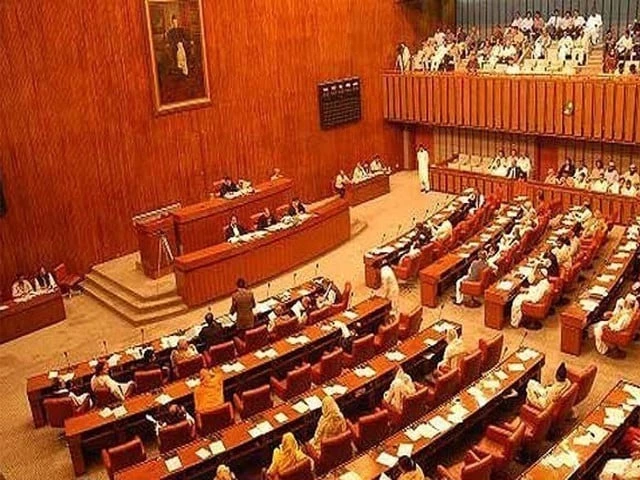
The Senate on Tuesday witnessed heated exchanges between the government and opposition over the health and treatment of PTI founder Imran Khan, with the opposition accusing the government of failing to implement a Supreme Court order and the treasury benches insisting that compliance with the judgment was a matter for the court to determine.
The PTI made another attempt to move a resolution seeking treatment for Imran Khan at Shifa International Hospital, but Presiding Officer Senator Shahadat Awan stopped it, saying the matter was sub judice and could be raised as a point of order but not through a resolution.
Senator Ali Zafar said no government could refuse to implement a Supreme Court order, citing Article 190 and other constitutional provisions. He said the apex court had ordered on August 18 that Imran Khan be taken to Shifa Hospital and a medical board subsequently constituted.
He alleged that Imran was neither taken to Shifa nor was the medical board formed, while the required cardiac examination facility was also unavailable at PIMS. Zafar accused the government of changing the court’s directions.
Adviser to the Prime Minister Rana Sanaullah rejected the opposition’s allegations, saying judicial orders had to be obeyed but it was for the court itself to determine whether its judgment had been implemented.
Sanaullah said doctors had declared Imran Khan’s condition satisfactory and he was subsequently sent back to jail. He said the government took a last-minute decision to shift him to PIMS because of the law and order situation, but ensured that he was examined by qualified doctors at a government hospital.
He said the court order regarding treatment at a private hospital had no applicable provision or precedent and maintained that the Supreme Court would decide on September 16 whether its order had been followed.
PTI Senator Mushaal Yousafzai questioned whether Imran Khan had undergone blood tests or CT angiography, saying the government was repeatedly citing his blood pressure while avoiding other medical examinations.
She rejected allegations that the PTI was politicising Imran’s health and said the party was only presenting the facts before the government and the public. She also disputed the government’s claim that the Supreme Court judgment was ambiguous, saying the judgment contained no such ambiguity.
Senator Azam Swati criticised a selective implementation of decisions, referring to the treatment and travel arrangements made for Nawaz Sharif. Opposition Leader Allama Raja Nasir Abbas called on the government and prime minister to show political maturity and resolve the issue through dialogue, saying Imran Khan’s supporters were patriotic Pakistanis.
The Senate also discussed gas shortages, particularly in Balochistan, and the Iran-Pakistan gas pipeline. Senator Raja Nasir Abbas said Pakistan should seek relief from US sanctions to proceed with the pipeline, arguing that the project could have supported the country’s industry if completed earlier.
Federal Minister Ali Pervaiz Malik said sanctions had prevented practical progress on the pipeline, adding that both sides were seeking a solution in a friendly environment. He said Iran had completed substantial work on its side, while the prime minister had formed a steering committee to examine legal and other issues.
The issue of rising medicine prices also came under discussion, with Senator Zeeshan Khanzada saying approval for prices of around 40 important and life-saving medicines remained pending.
He said delays in price approvals, the high cost of imported active pharmaceutical ingredients and increased taxes were creating difficulties for patients and the pharmaceutical industry, and warned of possible shortages of life-saving medicines.
Federal Health Minister Mustafa Kamal said medicine exports had increased recently, with Pakistan exporting medicines to 52 countries. He said agreements worth $300 million had been signed following a conference with China.
Kamal said a World Health Organisation inspection was scheduled for October 1 and, if approval was secured, Pakistani medicines could gain access to 100 countries.
He said prices of 35 medicines had been fixed during the previous month, while 52 cases had been finalised by the relevant committee and sent to the cabinet.
The Senate also approved a resolution paying tribute to the Holy Prophet Muhammad (PBUH) and highlighting his life and teachings on the occasion of Eid Milad-un-Nabi. The session was adjourned until 10:30am on Friday.