Arab, Muslim leaders alarmed by Netanyahu’s persistent lobbying for resumption of Iran war, the Financial Times says
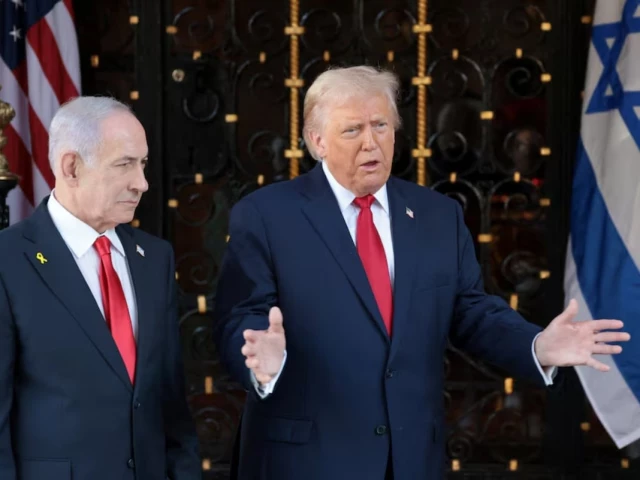
US President Donald Trump speaks to the media next to Israeli Prime Minister Benjamin Netanyahu upon arrival for meetings at Trump’s Mar-a-Lago club in Palm Beach, Florida, US, December 29, 2025. REUTERS
Israeli Prime Minister Benjamin Netanyahu has been calling US President Donald Trump “every day” to urge him to resume military action against Iran despite diplomatic efforts to end the conflict, The Financial Times reported on Monday.
“Netanyahu calls him every day [to urge him to resume the war],” a person briefed on the discussions told the British newspaper.
He said figures inside and outside the White House who oppose renewed fighting have been trying to counter Netanyahu’s pressure to resume the war.
“The regional leaders are telling him (Trump) not to escalate and prioritise negotiations,” the source said.
Another person familiar with the situation in Israel said Netanyahu wants military action against Iran to resume, but there was not currently a coordinated “push” to persuade Trump.
The Financial Times said Arab and Muslim leaders have been alarmed by Netanyahu’s persistent lobbying for a resumption of the Iran war.
Read: Qatar, Saudi Arabia, UAE, Kuwait, others prefer naval blockade of Iran, claims Trump
On Monday, Trump said that Gulf allies oppose a new military campaign against Tehran.
“Qatar, Saudi Arabia, UAE, Bahrain, Kuwait and others would prefer the status quo,” Trump wrote in a Truth Social post following his talks with Qatari Prime Minister Mohammed bin Abdulrahman Al Thani.
Netanyahu, who remains a caretaker prime minister following last month’s inconclusive elections in Israel, has called for renewed US-Israeli strikes aimed at forcing the collapse of Iran’s government.
Trump, however, said there was “positive momentum” toward ending the nearly nine-month war and that renewed US strikes on Iran now appeared “quite unlikely.”
Diplomacy
A diplomat briefed on Trump’s meeting with the Qatari prime minister said there was agreement that “diplomacy is the preferred way forward to get a deal.”
According to the Financial Times, Turkish President Recep Tayyip Erdogan, Saudi Crown Prince Mohammed bin Salman, UAE President Mohammed bin Zayed Al Nahyan, and Qatari Emir Tamim bin Hamad Al Thani have spoken with Trump in recent days to urge him to give diplomacy more time.
Regional leaders fear renewed fighting could trigger a broader Iranian response and deepen instability across the Middle East, the report said.
Iran, for its part, has warned that it is prepared to respond to any renewed attacks and could expand the conflict beyond the Middle East.
Mediators have struggled for weeks to break a deadlock between Washington and Tehran over an interim agreement, with both sides discussing a proposal based on a seven-day plan Iran presented in September that Trump previously rejected.
Read more: Iran rules out US negotiations until 7 conditions met
On Monday, Qatar-based television Al Jazeera reported that Sheikh Mohammed’s separate talks with Trump and his Vice President JD Vance had made “good progress” on Iran, citing a source familiar with the discussions.
A diplomatic source told the channel that the talks sought to narrow differences between Washington and Tehran and advance negotiations.
An unnamed Iranian official meanwhile told the semi-official Fars News Agency on Monday that reports of talks to reopen the Strait of Hormuz in exchange for the release of $8 billion in frozen Iranian assets were false.
The official said Tehran would negotiate only within the framework of seven conditions it had conveyed to Washington, including lifting the naval blockade and unilateral sanctions, releasing frozen assets and ending the war.
The US and Israel launched attacks on Iran on Feb. 28. A memorandum of understanding was reached in July to end hostilities, but fighting resumed as diplomatic efforts stalled.