Cites UNSC report which estimates approximately 6,000 TTP fighters are present in Afghanistan
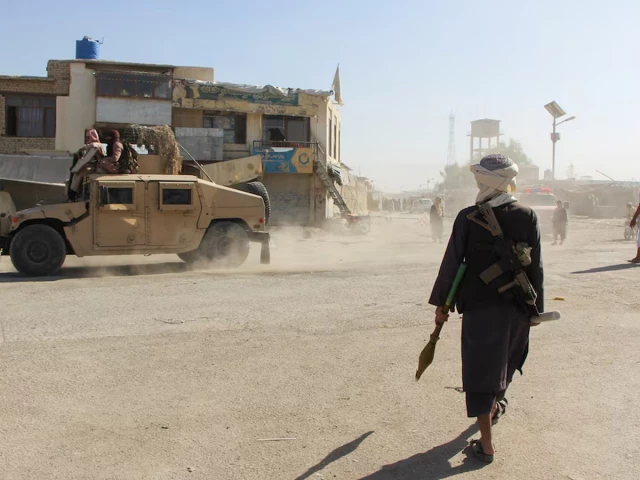
Afghan Taliban patrol near the Afghanistan-Pakistan border in Spin Boldak, Kandahar Province on October 15, 2025. Photo: Reuters/ File
The Ministry of Information and Broadcasting (MoIB) on Monday called out the Afghan Taliban for resorting to “rhetoric and diversion” to deflect attention from terrorist groups operating from Afghan territory and launching attacks against Pakistan.
In a post on X, the ministry said the Afghan Taliban regime’s spokesperson had once again resorted to rhetoric instead of addressing what it described as a well-documented terrorist threat emanating from Afghanistan.
It added that attempts to shift attention towards Pakistan’s internal affairs could not conceal the Afghan Taliban’s failure to prevent terrorist groups from using Afghan territory to plan and launch attacks against Pakistan.
The Afghan Taliban regime’s spokesperson has once again resorted to rhetoric and diversion instead of addressing the well-documented terrorist threat emanating from Afghan territory. Attempts to shift attention towards Pakistan’s internal affairs cannot conceal the regime’s…
— Ministry of Information & Broadcasting (@MoIB_Official) October 12, 2026
Pakistan has repeatedly accused the Afghan Taliban regime of failing to act against militant sanctuaries despite being provided with information about their locations and activities.
Citing the Sixteenth Report (S/2025/796) of the UN Security Council’s Analytical Support and Sanctions Monitoring Team, the ministry said the report estimated that approximately 6,000 Tehreek-e-Taliban Pakistan (TTP) fighters were present in Afghanistan and documented Taliban support for the group.
“These findings cannot credibly be dismissed as Pakistani propaganda. The regime must address this documented threat through concrete action rather than denial,” the ministry said.
Also Read: ‘Irrefutable evidence’ links Afghan soil to terror attacks in Pakistan
It also criticised the Afghan Taliban regime’s record on governance and citizens’ rights, saying its attempts to lecture others on these issues rang hollow in light of its continued restrictions on girls’ education and violations of fundamental human rights.
The ministry reiterated that Pakistan remained committed to dialogue, but said meaningful progress required the Afghan Taliban regime to honour its counterterrorism commitments and take verifiable action against terrorist sanctuaries and support networks.
“Pakistan will take all necessary measures, in accordance with international law, to protect its citizens, defend its sovereignty and safeguard its territorial integrity. The responsibility to end the use of Afghan territory for attacks against Pakistan rests squarely with the regime,” it concluded.
Terrorism emanating from Afghanistan
Islamabad has rejected Taliban assurances that Afghan territory would not be used against neighbouring countries, arguing that the ground situation and documented militant activity tell a different story.
Pakistan maintains that the terrorist nexus extended beyond the movement of terrorists across the border to their training, arming and operational support.
Security officials estimate that up to 70 per cent of the Fitna al-Khawarij terrorists infiltrating Pakistan were of Afghan origin. They further claim that the Taliban regime had allowed leftover US and NATO weapons to reach terrorist groups, including Fitna al-Khawarij and Fitna al-Hindustan.
The security establishment also linked the escalation in attacks to the presence of terrorist infrastructure inside Afghanistan.
In 2026 alone, terrorism emanating from Afghan soil claimed the lives of 1,327 Pakistanis and injured another 2,484, according to figures cited by Pakistani authorities.
Officials said that whenever Pakistani forces targeted terrorist hideouts, the Taliban regime instead moved to defend the militants and their sanctuaries rather than dismantling the infrastructure. The issue, Pakistan has argued, was not confined to TTP.
UN assessments have continued to document the presence of several other militant organisations in Afghanistan, including al Qaeda, the East Turkestan Islamic Movement (ETIM) and Islamic State-Khorasan, reinforcing concerns about the broader militant ecosystem operating from Afghan territory.
Pakistani officials say the continued presence of these groups, combined with training facilities, cross-border infiltration and access to sophisticated weapons, demonstrates that Afghanistan remains an important base for terrorist activity affecting Pakistan.
Pakistan’s position, according to officials, remains that Kabul must take concrete steps to dismantle terrorist sanctuaries, eliminate training infrastructure, prevent cross-border infiltration and ensure that Afghan territory is not used for attacks against Pakistan.
The government has maintained that the issue was fundamentally one of Pakistan’s national security and that continued attacks from Afghan soil cannot be addressed through denials alone.
Pakistan says it expected the Taliban regime to fulfil its commitments by taking verifiable action against terrorist groups operating from its territory rather than defending or denying their presence.