ISLAMABAD:
Pakistan’s already troubled relations with the Afghan Taliban regime appear to have reached a point where a diplomatic reset is becoming increasingly difficult, as officials privately acknowledging that the relationship could deteriorate further.
There had been hopes that a recent diplomatic push involving Türkiye and Qatar might open the door to some form of engagement between Islamabad and Kabul.
The Turkish intelligence chief and Qatar’s deputy national security adviser travelled to Kabul in a bid to explore ways of easing tensions between the two neighbours.
The Turkish intelligence chief also travelled to Islamabad as part of the regional effort. But the diplomatic initiative appeared to collapse before it could get off the ground.
A day after the Turkish and Qatari officials held engagements in Kabul, the Kohat police lines were rocked by a deadly terrorist attack. One of the suicide attackers was identified as an Afghan national.
For Pakistani officials, the attack reinforced their longstanding concern that terrorist groups operating from Afghan soil continue to pose a direct security threat to Pakistan. Islamabad subsequently launched what it described as calibrated strikes against terrorist hideouts inside Afghanistan.
The Taliban regime responded by sending rudimentary drones towards Pakistani territory, according to Pakistani officials, but the drones were neutralised before causing casualties or significant damage.
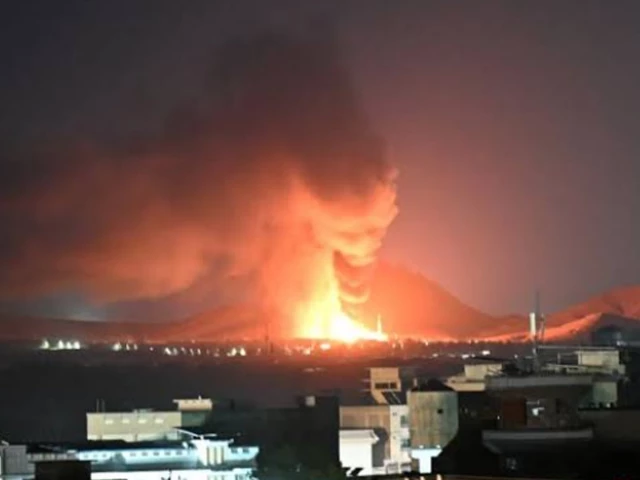
Pakistan then carried out a fresh series of strikes against what officials described as drone storage facilities and launch sites at around 10 locations inside Afghanistan. One of the sites was in Kandahar, the spiritual headquarters of the Afghan Taliban.
“They (Taliban) may have taken some steps to address Pakistan’s concerns, but those measures are not enough and are cosmetic in nature,” said a senior Pakistani official dealing with the matter.
The latest escalation has also cast a shadow over Türkiye’s efforts to facilitate communication between Islamabad and Kabul. There have been reports that the Turkish intelligence chief was not accorded the level of access expected during his visit to Kabul.
According to the source, the Turkish delegation had initially expected to meet Taliban Amir Haibatullah Akhundzada in Kandahar. However, Akhundzada later deputed a member of his staff to meet the visiting delegation. The move was not well received by the Turkish side, the source said.
The outcome of the latest diplomatic push did not surprise Pakistani policymakers. “We know the Taliban so well. They are not going to mend their ways,” the official said.
The official acknowledged that, given the current trajectory, relations between the two neighbours were likely to become even more strained. “We have, I think, reached a point of no return,” the official said in a candid assessment.
Another factor increasingly shaping Islamabad’s calculations is the emergence of armed resistance against the Taliban regime in parts of Afghanistan.
The recent developments in Nuristan are particularly significant. Hundreds of fighters belonging to the Afghanistan Freedom Front (AFF), an anti-Taliban group, claimed to have captured several Taliban positions in Kamdesh district.
The Taliban offered a different account, saying the attack had been repulsed and alleging that the fighters had crossed from Pakistan. Islamabad rejected the allegation, saying Kabul had provided no evidence to substantiate the claim.
Pakistani policymakers, however, believe the Taliban regime’s repeated accusations against Pakistan could have an unintended consequence: further weakening its own position against armed opposition groups.
For years, some anti-Taliban elements had viewed the Islamabad-Kabul tensions as largely tactical, believing that Pakistan remained, in one form or another, an ally of the Taliban. That perception, an official said, discouraged some of these groups from openly challenging the Taliban regime.
But as tensions between Islamabad and Kabul deepen, and the Taliban leadership itself increasingly accuses Pakistan of supporting or facilitating its opponents, anti-Taliban groups may conclude that the old understanding no longer exists.
The result, according to the official, could be greater pressure on the Taliban’s writ in parts of Afghanistan. “If the Taliban regime’s writ is challenged further, it won’t be a surprise,” the official said.