PUBLISHED
June 21, 2026
KARACHI:
Historically, militant groups involved women in support roles, such as logistics, intelligence gathering, or propaganda. These roles were largely shaped by entrenched gender norms and the perception that women were less likely to engage in direct violence. That pattern, however, has changed dramatically. Over the past few decades, the use of women by violent groups has shifted from symbolic roles to, in some cases, direct participation in combat operations, including suicide missions.
Towards the end of the 20th century, militant groups began to recognise the tactical advantages of deploying women. The Liberation Tigers of Tamil Eelam (LTTE) — the organisation that waged a deadly separatist insurgency in Sri Lanka until its military defeat in 2009 — was among the earliest groups to normalise the use of female bombers as early as the 1980s and 1990s.
“One of the earliest examples was the LTTE. A female Tamil suicide bomber, Dhanu (real name Thenmozhi Rajaratnam), carried out the assassination of then Indian prime minister Rajiv Gandhi in 1991,” says terrorism and security expert Dr Manzar Zaidi. Women were also deployed during the Palestinian Intifada in operational roles, including suicide missions, indicating that they were not merely passive supporters but active combatants, he adds.
By the 2000s, the strategy caught the attention of militant organisations worldwide. Groups like Chechen separatists, especially the “Black Widows”, Boko Haram in Nigeria, and the Islamic State in Iraq and Syria (ISIS) increasingly used women for suicide operations.
Boko Haram, in particular, institutionalised the use of female suicide bombers, including abducted girls. “Many women were abducted, abused, and forcibly recruited. Trauma and coercion played a central role,” says forensic psychologist Aftab Shah.
Motivations, according to him, varied widely, including revenge, personal loss, ideology, or perceived honour. “In Chechnya, women who lost family members joined militant groups seeking retribution. Others were driven by identity, redemption, or grievance narratives.”
This global shift is now increasingly visible in Balochistan, where security officials say militant groups such as the Balochistan Liberation Army (BLA) and its affiliates have begun systematically involving women in propaganda and operational roles.
“The BLA has used videos in local languages to target young audiences, particularly women,” says cyber security expert Fahad Nabeel. “It uses propaganda techniques that normalise its narrative and portray militants as ordinary individuals engaged in resistance.”
The BLA, designated as a terrorist organisation by Pakistan, the United States, the United Kingdom, China, the European Union, and Iran, has evolved from hit-and-run guerrilla tactics to more coordinated and high-profile attacks, including suicide operations.
Empowerment or manipulation?
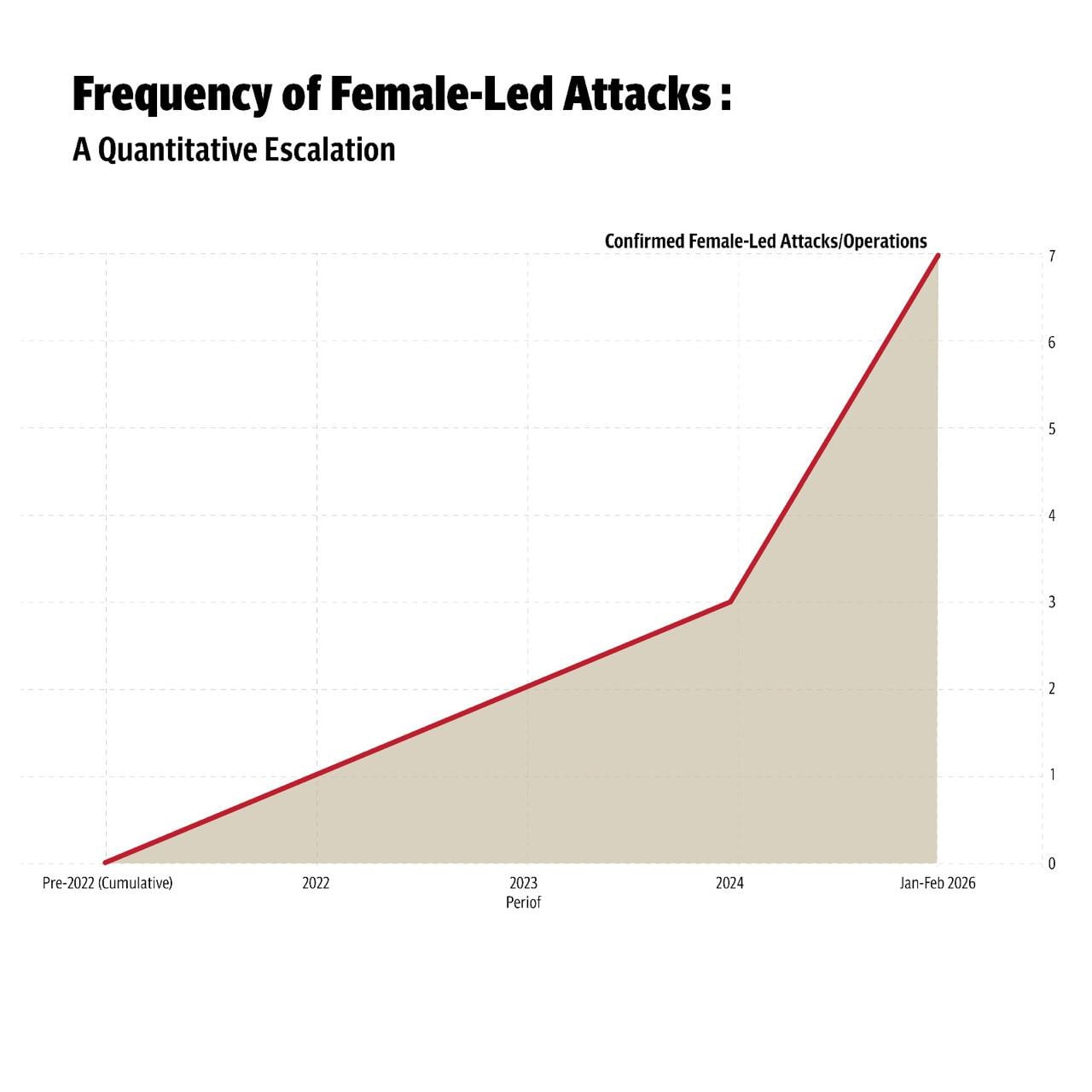
Security analysts have observed a visible shift since 2022. “Globally, women accounted for about 15% of all suicide bombers over the past four decades. The recent rise in their involvement in BLA-linked attacks is therefore significant,” says Shah.
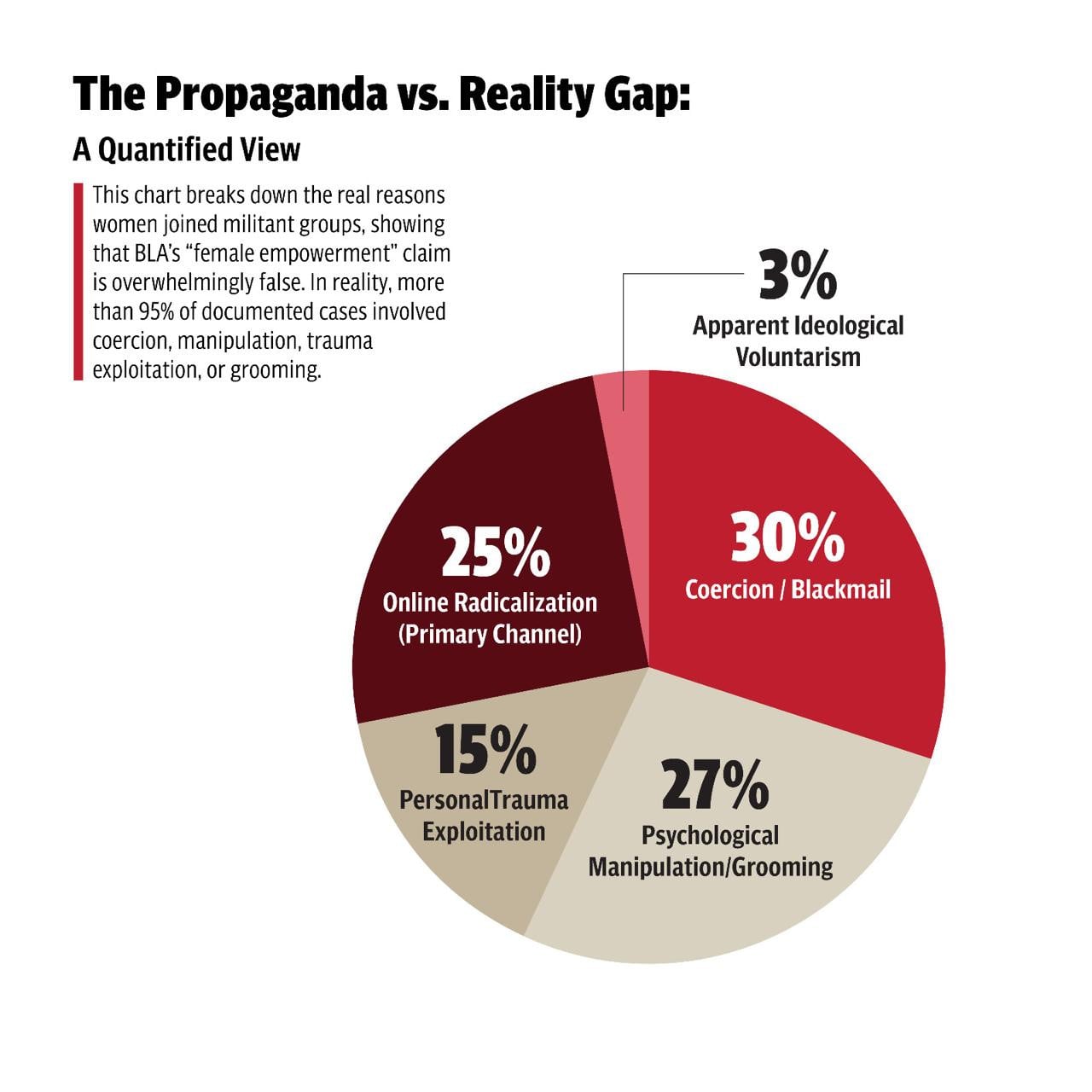
The BLA, experts say, is expanding its recruitment of women to broaden its reach while simultaneously evading detection. The reality of manipulation and exploitation that underlies women’s recruitment is often concealed by their portrayal as symbols of “resistance.”
The BLA tries to project women’s participation as empowerment but it is, in reality, a calculated system of coercion, psychological manipulation, and operational exploitation. “The evidence points overwhelmingly to exploitation rather than empowerment. Groups like the BLA are weaponising societal assumptions that women are harmless, exploiting the likelihood that security personnel are less inclined to perceive them as threats,” says Shah.
The leadership structures of these groups, according to him, are male-dominated, with women rarely seen in positions of authority. Instead, they are largely used as instruments to further organisational objectives — expected to die for the cause, but never allowed to lead it.
Militant groups radicalise women — often educated yet socially or emotionally vulnerable — through ideological grooming, personal grievances, or digital propaganda ecosystems. This aligns with broader intelligence assessments in Pakistan, which suggest that women’s inclusion in BLA attacks is driven less by ideological transformation and more by tactical expediency.
Tactical advantages
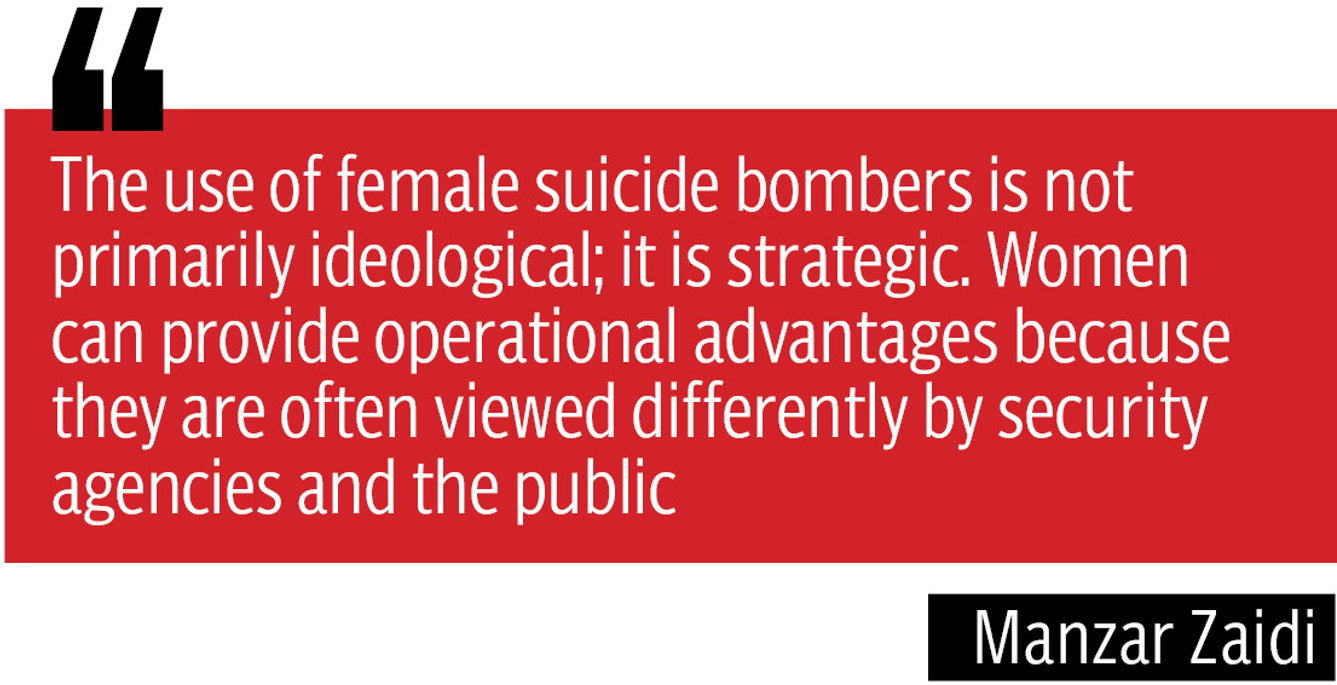
“The use of female suicide bombers is not primarily ideological; it is tactical. Women can provide operational advantages because they are often viewed differently by security agencies and the public,” says Dr Zaidi.
Shah agrees. “Security personnel and society at large tend to view women and children as non-combatants, creating a blind spot that militant groups exploit. Social expectations make women less likely to be suspected, while cultural norms can complicate physical searches. Clothing such as the abaya may also, in some cases, facilitate concealment,” he says.
There is also a propaganda dimension to this strategy. Female bombers, according to Shah, attract greater media attention by challenging societal expectations, producing a stronger psychological impact and wider coverage domestically and internationally. Militant groups may also use women’s participation to shame men into joining their cause.
Defence analyst SM Hali, meanwhile, believes women’s recruitment by the BLA reflects both desperation and innovation. “Faced with sustained pressure from security forces and disruption of traditional networks, the group appears to be seeking alternative operational methods. At the same time, it can be seen as an innovation, exploiting the specific operational advantages and tactical niche that women may provide,” he says.
Turning point in strategy
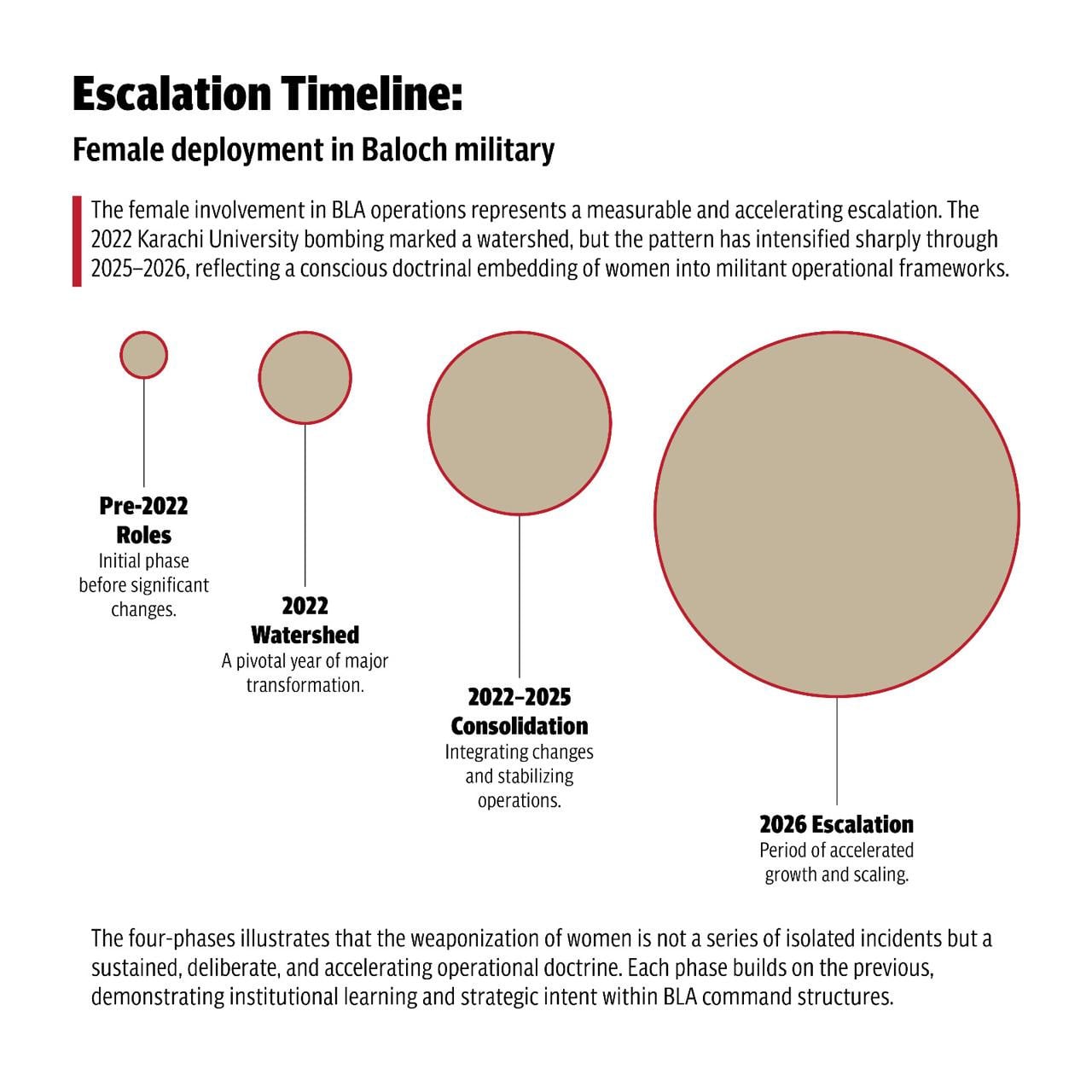
The April 2022 suicide bombing by a young mother, Shari Baloch, at Karachi University’s Confucius Institute was a turning point in the evolution of female militancy within BLA. The deadly attack shattered long-standing assumptions about gender roles in militant operations and triggered a reassessment among security analysts and policymakers.
The targeting of Chinese nationals struck at the symbolic core of the China-Pakistan Economic Corridor (CPEC), with the dual objective of straining Sino-Pak ties and demonstrating the group’s ability to penetrate high-security urban environments. The BLA amplified Shari’s image through propaganda, portraying her as a “martyr” in an attempt to motivate more women to join the fight.
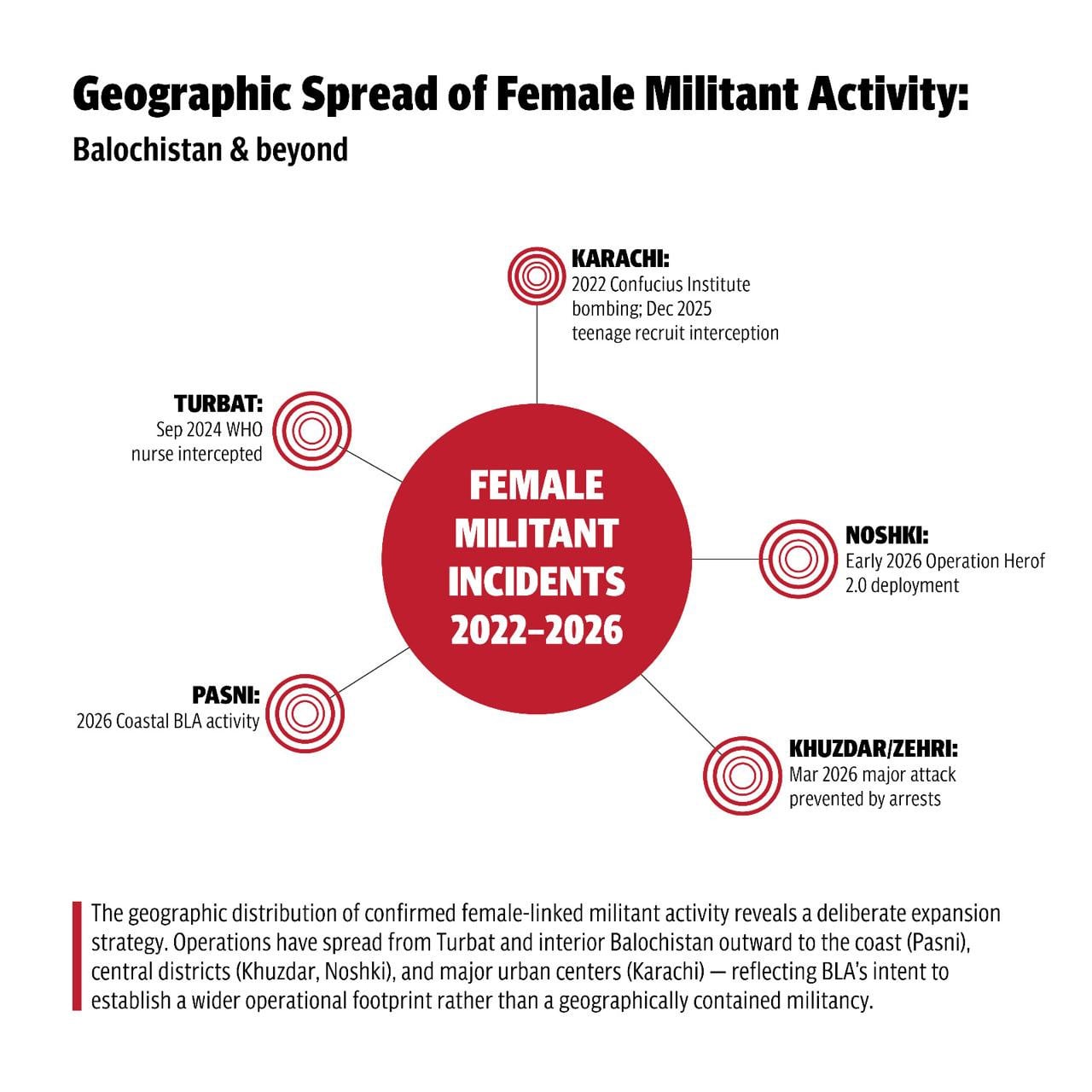
The strategy appears to have worked, with security agencies observing a dramatic rise in women’s involvement in BLA operations since then. Between 2022 and 2025, several women, including Sumaiya, Mahikan, Mahal, and Zareena, were linked to suicide attacks. The trend escalated in early 2026 with a coordinated series involving six female operatives. Five were killed in security operations, while one, identified as Dur Jan Baloch of the BLA’s Fateh Squad, survived. Officials say the pattern points to a broader operational shift within the militant network.
OSINT indicates a more structured integration of women in the BLA’s “Operation Herof 2.0” in 2026, with women deployed in multiple districts in synchronised attacks. Operatives, including Hawa Baloch, Yasma Baloch, Asifa Mengal, Maryam Buzdar, and Hatam Naz, were central to high-value strikes on security installations, reflecting a systematic use of women in recruitment, planning, and high-risk operations.
Recruitment beyond stereotypes
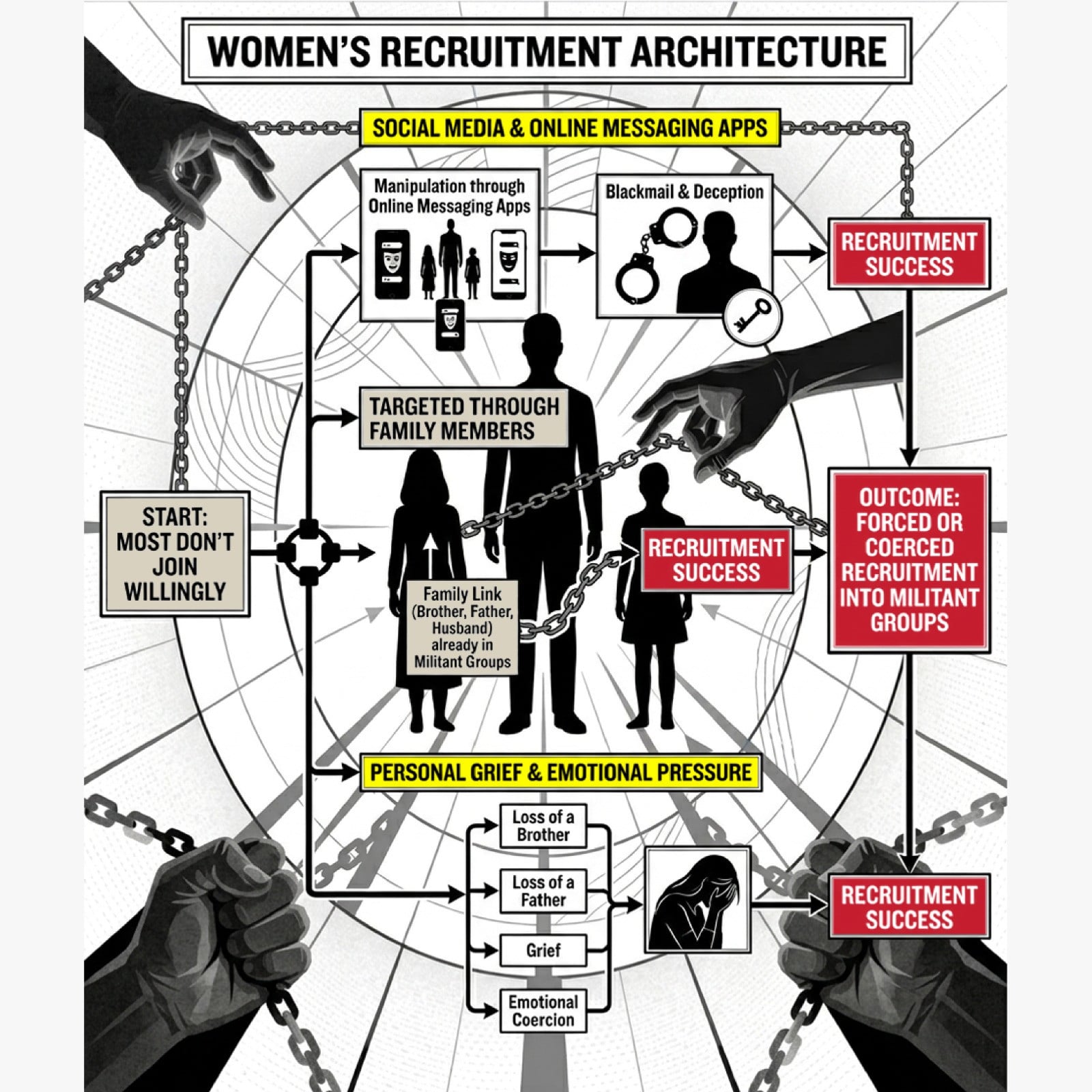
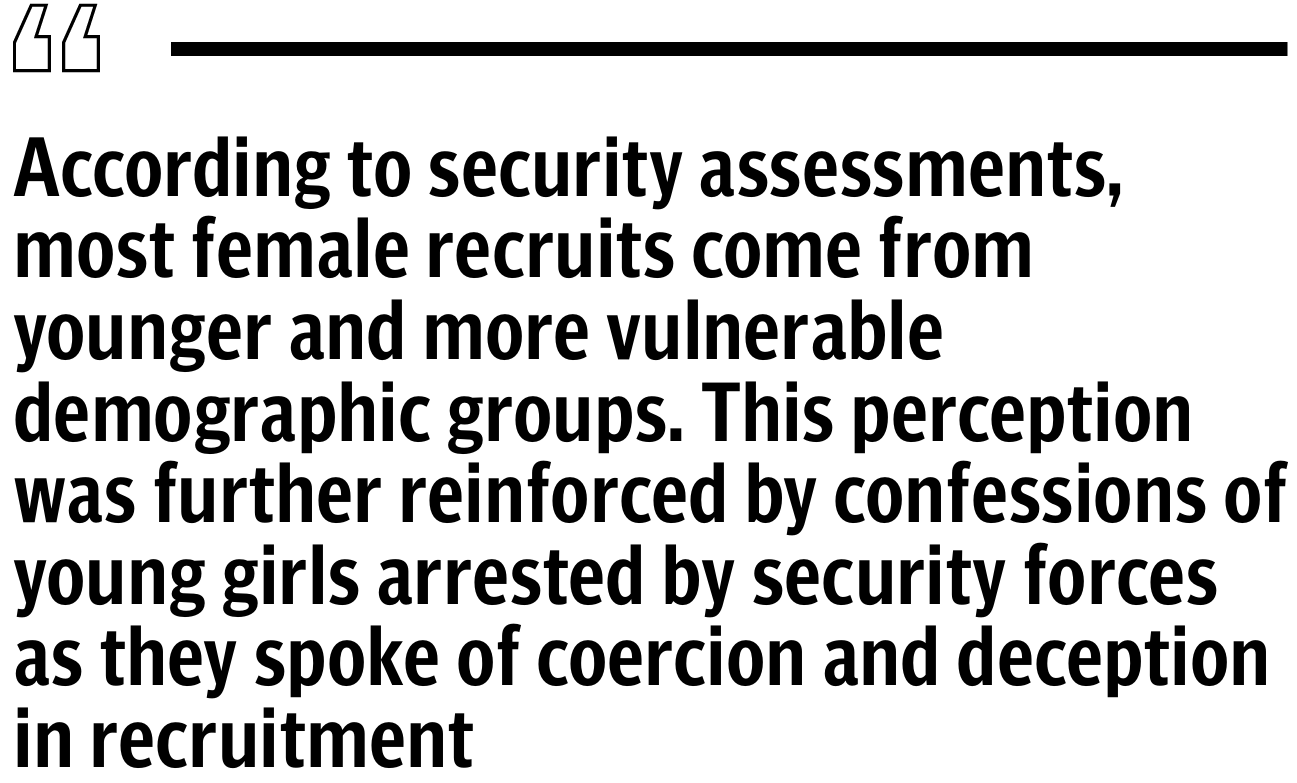
According to security assessments, most female recruits come from younger and more vulnerable demographic groups. This perception has been reinforced by confessions of young girls arrested by security forces as they spoke of coercion and deception in recruitment.
On Sept 25, 2024, a young nurse Adeela Baloch, previously associated with WHO and Turbat Teaching Hospital, stated that she had been “misguided by terrorists” into “volunteering” for a suicide mission before being intercepted by security forces. Her confession pointed to psychological manipulation, emotional exploitation, and coercion tactics used by militant handlers.
Adeela was not an isolated case. In mid-March 2026, a planned attack was foiled in Khuzdar with the arrest of a 19-year-old would-be bomber, identified as Laiba, alias Farzana. She later publicly confessed to being radicalised and pressured into militancy, and said she had also been instructed to recruit other women. Another would-be bomber, Khair-un-Nisa from Turbat, was arrested while en route to Islamabad. By her own admission, she had been coerced by a relative into joining the BLA.
However, sweeping generalisations would be misleading, as exceptions may exist. Several women recruited by the BLA are from urban backgrounds. They are often educated. And they are not necessarily ‘misled’ in simplistic terms; rather, they may be influenced through psychological conditioning, ideological framing, or, in some cases, incentives that encourage participation in suicide operations.
Motivations for violence
Experts suggest there may be several motivations behind a woman’s decision to embrace violence. “Women may be recruited into violent roles by framing participation as a source of purpose, honour, or elevated status, including notions of heroism or martyrdom,” says Hali.
“In some cases, personal grievances — such as the loss of a family member in security operations — may be exploited or reframed to encourage involvement in militancy. Others may be drawn in through promises of recognition and importance, which can have a strong psychological pull and, in certain cases, lead to suicide attacks,” he adds.
Psychologist Shah adopts a broader political and ideological lens to explain the phenomenon. “The situation in Balochistan closely resembles cases seen among the Tamil Tigers or Kurdish militants in Turkey. These cases often involve educated, middle-class women rather than vulnerable or traumatised individuals,” he adds.
“In such situations, identity fusion with the group becomes important. Individuals begin to see the group’s grievances as their own. Genuine grievances may exist, but militant organisations exploit and weaponise them.”
Research also identifies revenge as a major driver. In conflicts such as Chechnya, women who lost husbands, fathers, or brothers became known as “Black Widows” and joined militant campaigns seeking retribution. Other motivations can include personal loss, honour, redemption, reputation, or a desire to correct perceived injustices.
Online recruitment
Now, the key question is how the BLA or its affiliates manage to recruit women in a conservative society like Balochistan, where female mobility is restricted and interaction with non-family men remains a taboo. The answer increasingly points to social media.
Online platforms originally designed to connect people have increasingly been repurposed as tools for propaganda, manipulation and radicalisation. Where militant groups once relied on physical training camps, much of their operational activity has now shifted online — from recruitment and fundraising to psychological warfare and operational messaging. Experts call it “digital terrorism.”
“Militant groups have effectively used social media platforms for years to reach young people, particularly young women. These platforms are used not only to target vulnerable individuals but also to recruit them by exposing them to extremist narratives,” says cyber security expert Nabeel. The expansion of the digital era has dramatically increased the use of online platforms as tools of radicalisation.
The use of digital terrorism was more systematic in the case of ISIS, which became the first militant group to weaponise social media at an unprecedented scale. Between 2014 and 2019, the ultra-extremist group leveraged platforms such as Twitter, Telegram, YouTube and encrypted apps to enlist thousands of recruits from across the world.
“ISIS established the Al-Khanssaa Brigade, a women’s division that actively recruited and indoctrinated women online from around the world,” says Dr Zaidi. “Women from countries such as the United Kingdom, Belgium, and France travelled to Syria after first encountering ISIS propaganda online. Numerous documented cases show that their initial contact with the organisation occurred through digital platforms.”
Baloch militant groups appear to have adapted similar tactics. Officials say the BLA, in particular, is using digital platforms to amplify its narrative, radicalise and recruit youth, and rapidly publicise its attacks, reflecting a broader shift towards tech-enabled insurgency.
Explaining the modus operandi, Nabeel says militant groups, such as BLA, follow a multi-layered recruitment strategy. It typically begins with the use of popular social media platforms to disseminate propaganda and identify individuals who appear sympathetic to their cause.
“Once potential recruits are identified, they are encouraged to move into private chats and encrypted messaging platforms. These platforms provide anonymity, making it easier to engage vulnerable individuals while making detection more difficult for law enforcement and intelligence agencies,” he adds. “Case studies show that individuals have become fully radicalised online without ever meeting a member of a militant group in person.”
 Confronting the challenge
The stereotypical portrayal of women as passive observers creates opportunities for terrorist organisations to use women as tactical and operational assets.
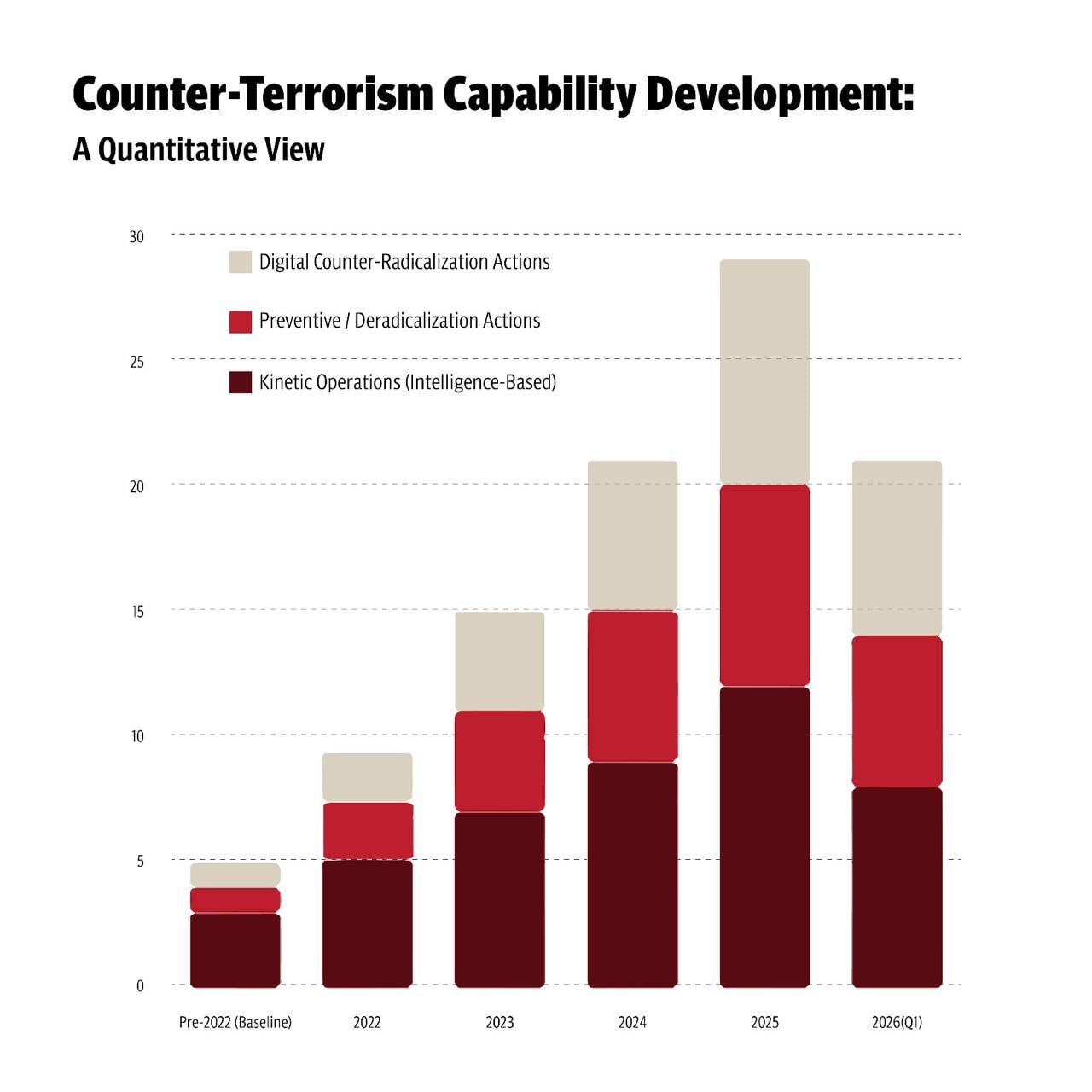
Dr Zaidi says counterterrorism agencies must recognise that women are part of the global terrorism landscape. “For too long, security and law enforcement agencies have had a blind spot regarding the role of women in extremist organisations,” he says. “Counterterrorism efforts must expand their focus.
At the same time, he says authorities need to understand why women are joining these organisations, identify the narratives being used to radicalise them, and determine whether there are specialised recruitment campaigns targeting women.
From a cybersecurity perspective, it is extremely difficult to identify the entire online ecosystem through which militant groups recruit. Terrorist organisations generate propaganda directly, while supporters and sympathisers further amplify that content across multiple platforms. This makes it difficult to track every piece of extremist material and develop effective counter-narratives.
“A further complication is the lack of content moderators familiar with local languages such as Balochi and Pashto. This allows extremist groups to spread propaganda more easily on major platforms,” says Nabeel. “One example is the BLA’s use of keyword obfuscation on TikTok, which allows propaganda videos to bypass moderation systems and reach wider audiences.”
He recommends the government invest heavily in digital literacy programs so that people can recognise extremist propaganda and understand that such content is often misleading, manipulative, and designed to cause harm. “The government should work closely with civil society organisations to identify early signs of radicalisation, particularly among teenagers.”
He further says that the government should strengthen cooperation with international technology platforms to identify extremist content in local languages. “A dedicated monitoring task force could help identify propaganda, develop counter-narratives, and coordinate with platforms to remove harmful content more effectively.”
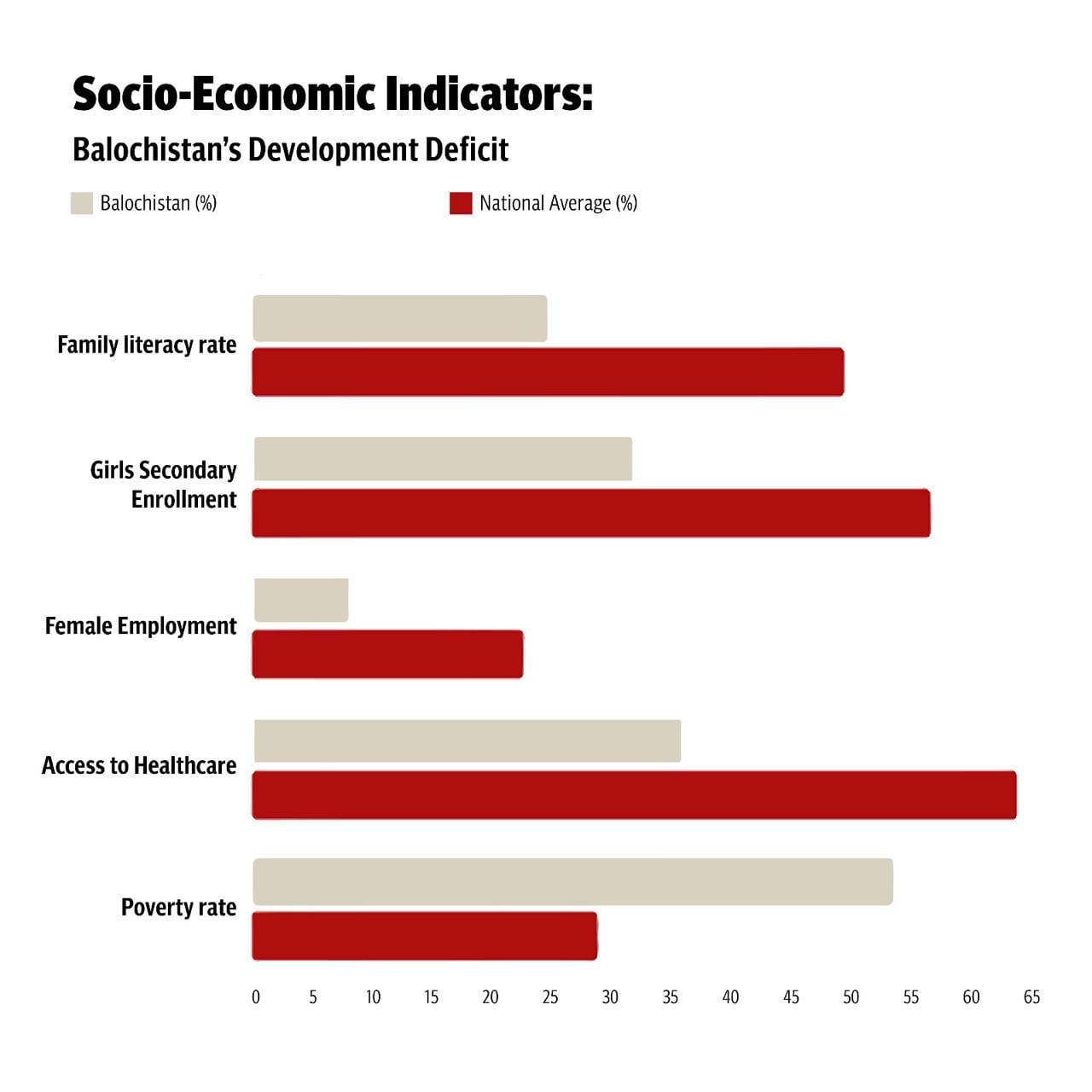
The use of women by the BLA and its affiliates is not merely a tactical shift; it disrupts social norms and erodes community trust in the volatile province. Women joining violent networks risk generating suspicion and fear, where ordinary women may face increased scrutiny, social pressure, or restrictions on their mobility. Of particular concern is the potential reversal of gains in female education, economic participation, and public engagement achieved through sustained state efforts in the conservative society.
Overall, the weaponisation of women in Baloch militancy reflects a troubling intersection of militant adaptation and societal vulnerability. By exploiting cultural norms, psychological manipulation, and digital propaganda, these networks promote a false narrative of empowerment. Addressing this challenge requires a comprehensive response that combines security measures with socio-economic development, counter-narratives, and stronger community resilience to ensure long-term stability and protection of vulnerable individuals.