Fujairah exported about 1.7 million bpd of crude and fuels last year, about 1.7% of global demand
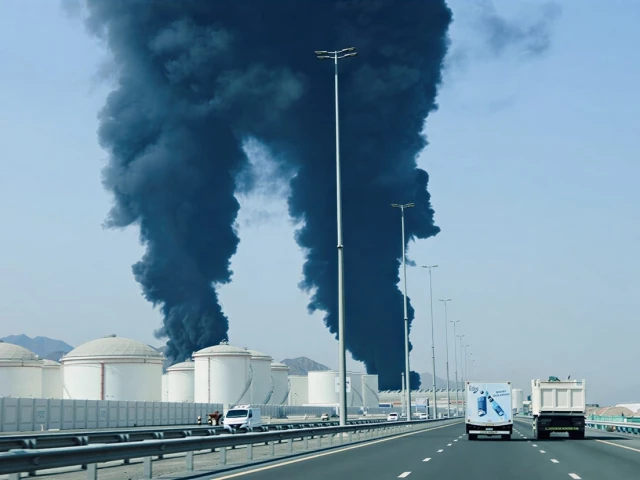
Smoke rises in the Fujairah oil industry zone, caused by debris after interception of a drone by air defenses, according to the Fujairah media office, amid the U.S.-Israel conflict with Iran, in Fujairah, United Arab Emirates, March 14, 2026. PHOTO: REUTERS
Some oil-loading operations have been suspended in the United Arab Emirates’ Fujairah port, a major global hub for refuelling ships as well as crude and fuel exports, after a drone attack and fire on Saturday.
Why does Fujairah matter globally?
Fujairah exported more than 1.7 million barrels per day of crude oil and refined fuels on average last year, according to Kpler data, a volume equal to about 1.7% of daily world demand.
The port is located on the Gulf of Oman, approximately 70 nautical miles from the Strait of Hormuz, which is effectively closed due to the Iran war, increasing the importance of Fujairah’s flows to the global market during the current conflict.
It sold 7.4m cubic metres (about 7.33 m metric tonnes) of marine fuels in 2025, making it the fourth largest in the world after Singapore, Rotterdam and China’s Zhoushan.
Read More: US ignites Iran war, but Gulf Arab states pay the price
Why does it matter to the UAE?
The UAE, which before the war began produced more than 3.4m bpd of crude, operates a 1.5m bpd pipeline that can transport some crude to bypass the Strait of Hormuz.
The Abu Dhabi Crude Oil Pipeline (ADCOP), also known as the Habshan–Fujairah Pipeline, transports oil from Abu Dhabi’s fields to Fujairah. The port loads the UAE crude grade Murban, sold mostly to buyers in Asia.
With Hormuz largely shut to exports, significant disruptions at Fujairah would force OPEC’s third‑largest crude producer to shut down more production.
Why does it matter to crude and fuel markets?
The port has a storage capacity of 18m cubic metres, making it one of the world’s top hubs for storing crude and fuels as well as blending operations.
Blending in the oil industry is the process of mixing different petroleum components to create finished products such as gasoline and bunker fuels that meet specific standards.
Major global storage companies operate at the port, including VTTI, Vitol, ADNOC, Vopak and others.
The Fujairah Oil Industry Zone hosts the Middle East’s largest commercial storage capacity for refined products.