Naftali Bennett criticises leadership amid ongoing operations in Gaza, Lebanon, Iran
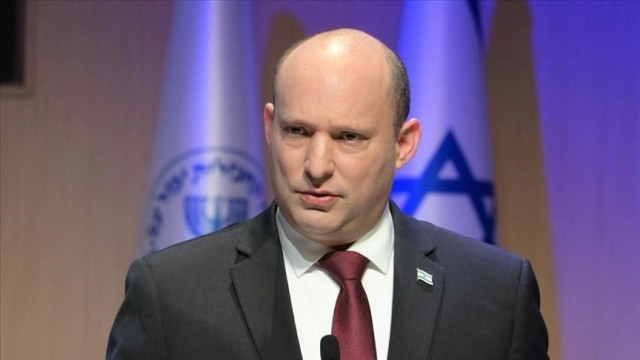
A photo of ex Prime Minister of Israel Naftali Bennett. PHOTO: FILE
Former Israeli Prime Minister Naftali Bennett said Thursday that Prime Minister Benjamin Netanyahu “does not know how to win in any arena,” criticising the government’s handling of military operations in Gaza, Lebanon and Iran, according to Israeli media.
“The current government’s political leadership is obstructing the army’s ability to achieve victory across multiple fronts,” Bennett said in an interview with Channel 12, accusing leaders of prioritising political considerations over security needs.
He said the military is facing a shortage of about 20,000 troops, arguing that drafting ultra-Orthodox Jews could help fill the gap but that “the government is avoiding the move for political reasons.”
“The current leadership in Israel does not know how to win in any arena,” Bennett added.
Read: UAE willing to join international force to reopen Straits of Hormuz, FT reports
Separately, the Haaretz daily on Thursday cited Israeli military spokesperson Effie Defrin as saying the army faces a shortfall of about 15,000 soldiers due to expanded operations on multiple fronts and the absence of legislation mandating ultra-Orthodox enlistment. Defrin said the military needs to reinforce forces in Lebanon, Gaza, the West Bank and Syria, adding that Chief of Staff Eyal Zamir is required to present his assessment of the army’s readiness and stressing the need to pass a law mandating conscription of ultra-Orthodox Jews.
The Yedioth Ahronoth newspaper also reported Thursday that Zamir warned that the army is heading toward internal strain amid growing operational burdens and the lack of legislation regulating recruitment and military service.
The proposed law aims to impose gradual enlistment quotas on ultra-Orthodox communities to address manpower shortages during the war, with financial and criminal penalties for those who refuse: a measure strongly opposed by religious parties.
The remarks come as the US and Israel have continued attacks on Iran since Feb 28, raising regional concerns about wider escalation and the possibility of a ground invasion.
Israel expanded its military operations in Lebanon on March 2 with airstrikes on Beirut’s southern suburbs and areas in the south and east, launching a limited ground incursion the following day.
In Gaza, Israeli forces continue daily violations of the ceasefire in place since October 10, 2025, killing 689 Palestinians and wounding 1,860 others, according to Health Ministry data. The ceasefire was meant to end a two-year genocide that killed more than 72,000 Palestinians, wounded more than 172,000, and destroyed about 90% of Gaza’s civilian infrastructure, with reconstruction costs estimated by the UN at around $70 billion.