Parliament speaker says Iranian people demand a ‘complete and regret-inducing punishment of aggressors’
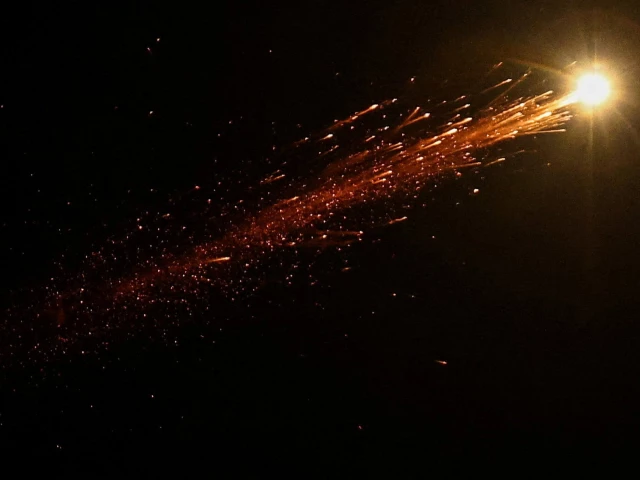
An Iranian missile flies toward Israel, amid the U.S.-Israel conflict with Iran, as seen from Jerusalem, March 11, 2026. PHOTO: REUTERS
Iran said on Monday that there have been no negotiations with the United States, rejecting reports of talks amid the ongoing conflict.
Speaking to the official IRNA news agency, Foreign Ministry spokesperson Esmaeil Baghaei said that over the past few days, messages had been conveyed through “friendly countries” indicating a US request for negotiations to end the war, adding that Iran responded in line with its “principled positions”.
He said Iran’s responses included warnings about the “serious consequences” of any attack on the country’s vital infrastructure, stressing that any action targeting Iran’s energy facilities would be met with a “decisive, immediate, and effective” response by its armed forces.
Baghaei also denied that any negotiations or dialogue with the US had taken place over the past 24 days since the outbreak of what he described as the “imposed war”.
He added that Iran’s position regarding the Strait of Hormuz and the conditions for ending the war “has not changed”.
Iran’s Parliament Speaker Mohammad Bagher Qalibaf said that no negotiations have taken place with the US, dismissing reports of talks as “fake news” aimed at manipulating financial and oil markets.
“No negotiations have been held with the United States. These fake news reports are meant to manipulate financial and oil markets and to escape the quagmire the US and Israel are stuck in,” Qalibaf said on X.
2/ No negotiations have been held with the US, and fakenews is used to manipulate the financial and oil markets and escape the quagmire in which the US and Israel are trapped.
— محمدباقر قالیباف | MB Ghalibaf (@mb_ghalibaf) March 23, 2026
He added that the Iranian people demand a “complete and regret-inducing punishment of aggressors”, stressing that all officials stand firmly behind the country’s leadership and the public until that goal is achieved.
US President Trump said today that recent talks with Iran had been “productive”.
He said he had ordered a five-day postponement of all strikes on Iranian power plants and energy infrastructure, citing “very good and productive” talks with Tehran over the past two days.
Regional escalation has continued to flare since the US and Israel launched a joint offensive on Iran on February 28, so far killing over 1,340 people, including then-Supreme Leader Ali Khamenei.
Tehran has retaliated with drone and missile strikes targeting Israel, along with Jordan, Iraq, and Gulf countries hosting US military assets, causing casualties and damage to infrastructure while disrupting global markets and aviation.